
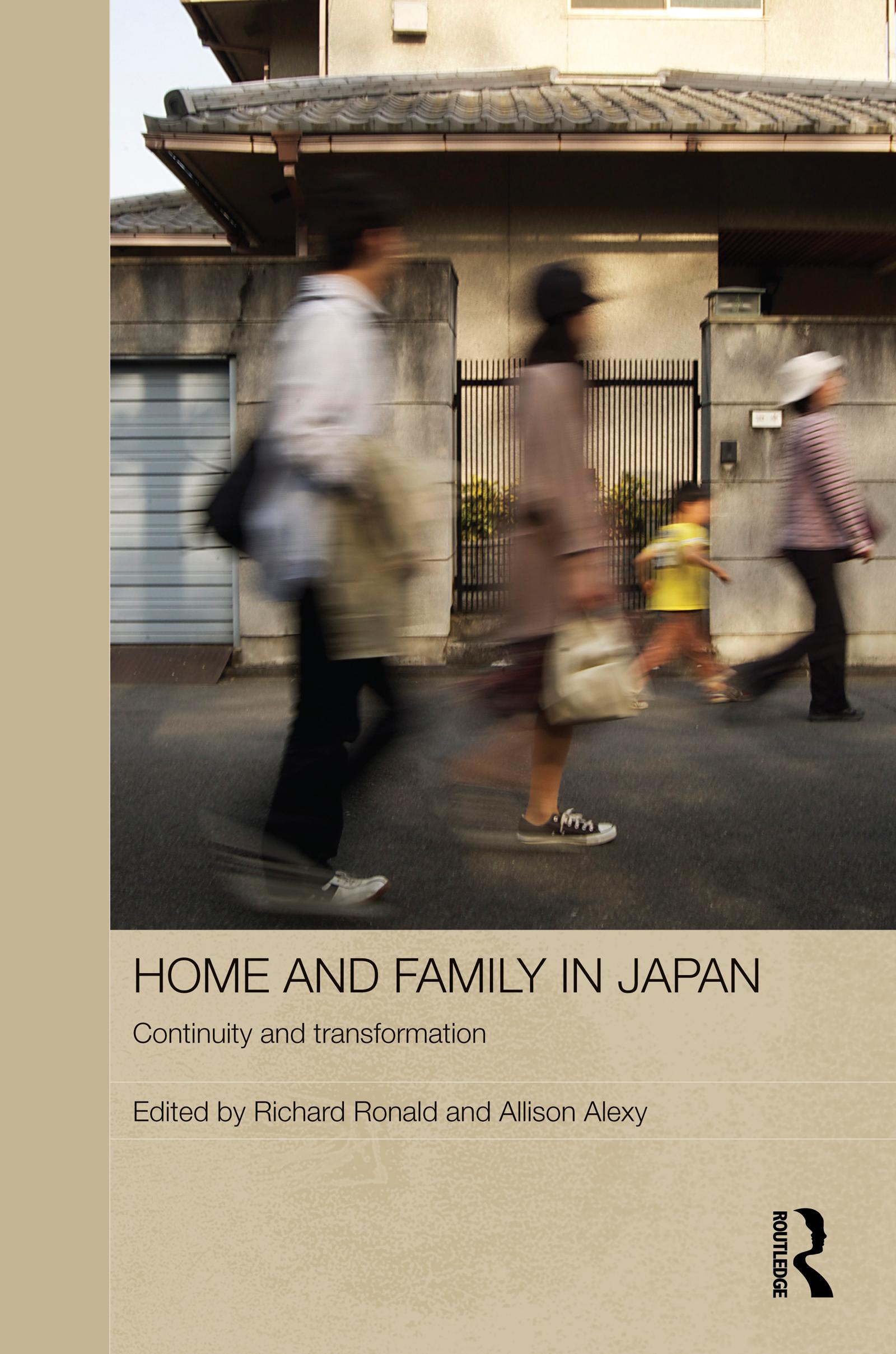
In the Japanese language the word ‘ie’ denotes both the materiality of homes and family relations within. The traditional family and family house - often portrayed in ideal terms as key foundations of Japanese culture and society - have been subject to significant changes in recent years. This book comprehensively addresses various aspects of family life and dwelling spaces, exploring how homes, household patterns and kin relations are reacting to contemporary social, economic and urban transformations, and the degree to which traditional patterns of both houses and households are changing.
The book contextualises the shift from the hegemonic post-war image of standard family life, to the nuclear family and to a situation now where Japanese homes are more likely to include unmarried singles; childless couples; divorcees; unmarried adult children and elderly relatives either living alone or in nursing homes. It discusses how these new patterns are both reinforcing and challenging typical understandings of Japanese family life.
Betala smidigt med kort, Klarna, Apple Pay eller Google Pay. Är du inte nöjd har du alltid 14 dagars ångerrätt. Läs mer i våra villkor. Har du några frågor, mejla oss på hello@memmo.org.
Memmo gör det enklare att plugga – var du än är i världen. Hos oss samlar du kursböcker och smarta studieverktyg på ett och samma ställe: sammanfattningar, quiz, poddar och flashcards. Och så Ted, din studiekompis som svarar på allt du undrar. Över 50 000 studenter pluggar redan här – byggt för att du ska lära dig snabbare och stressa mindre.