
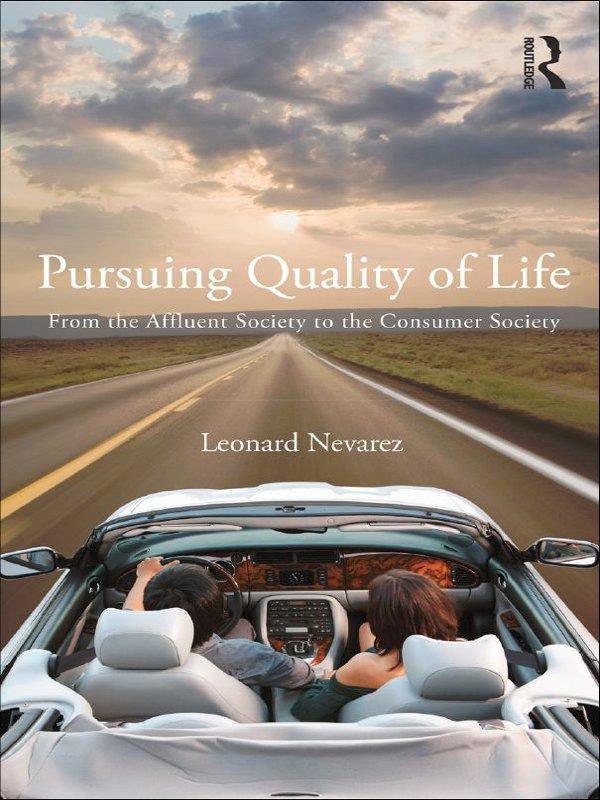
From anxieties over work-life balance and entangling technologies, to celebrations of cool jobs and great places to live, quality of life frames the ways we enhance our lives and legitimate social change today. But how does the idea of quality of life envision the greater good, and what gets lost as a result?
This book provides the critical framework for understanding the idea’s contexts and tensions that are conspicuously missing in popular discussions, professional activities, and scholarly research on quality of life. With multiple case studies taken across North America and Europe, it provides a sociological perspective on the contradictory ways we talk about and pursue quality of life in relation to technology, consumerism, family, work, public space, rural ways of life, and ultimately the final years of life. Drawing on contemporary and classical social theory, it provides an incisive account of the historical shifts in developed societies over the last half-century that have transformed our views and pursuits of quality of life. Originally a promise to undertake collective effort and pursue social justice at a moment of unprecedented opportunity, quality of life now enshrines a solipsistic ideal with which to accommodate the storms of market forces and political failure.
Betala smidigt med kort, Klarna, Apple Pay eller Google Pay. Är du inte nöjd har du alltid 14 dagars ångerrätt. Läs mer i våra villkor. Har du några frågor, mejla oss på hello@memmo.org.
Memmo gör det enklare att plugga – var du än är i världen. Hos oss samlar du kursböcker och smarta studieverktyg på ett och samma ställe: sammanfattningar, quiz, poddar och flashcards. Och så Ted, din studiekompis som svarar på allt du undrar. Över 50 000 studenter pluggar redan här – byggt för att du ska lära dig snabbare och stressa mindre.