
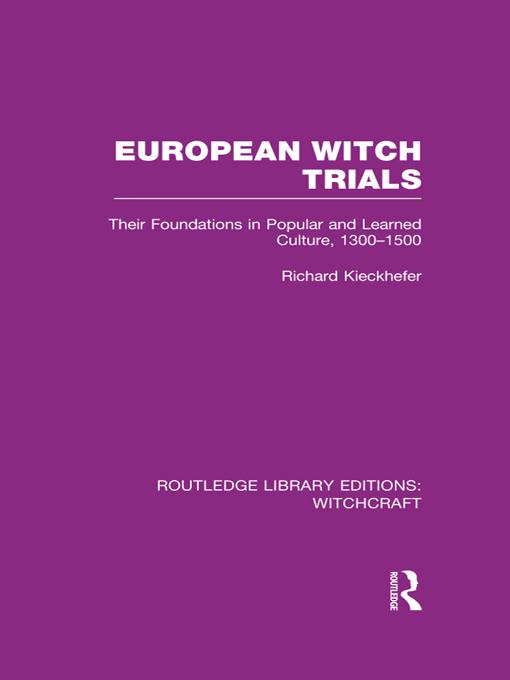
In popular tradition witches were either practitioners of magic or people who were objectionable in some way, but for early European courts witches were heretics and worshippers of the Devil. This study concentrates on the period between 1300 and 1500 when ideas about witchcraft were being formed and witch-hunting was gathering momentum. It is concerned with distinguishing between the popular and learned ideas of witchcraft. The author has developed his own methodology for distinguishing popular from learned concepts, which provides adequate substantiation for the acceptance of some documents and the rejection of others.
This distinction is followed by an analysis of the contents of folk tradition regarding witchcraft, the most basic feature of which is its emphasis on sorcery, including bodily harm, love magic, and weather magic, rather than diabolism. The author then shows how and why learned traditions became superimposed on popular notions – how people taken to court for sorcery were eventually convicted on the further charge of devil worship. The book ends with a description of the social context of witch accusations and witch trials.
Betala smidigt med kort, Klarna, Apple Pay eller Google Pay. Är du inte nöjd har du alltid 14 dagars ångerrätt. Läs mer i våra villkor. Har du några frågor, mejla oss på hello@memmo.org.
Memmo gör det enklare att plugga – var du än är i världen. Hos oss samlar du kursböcker och smarta studieverktyg på ett och samma ställe: sammanfattningar, quiz, poddar och flashcards. Och så Ted, din studiekompis som svarar på allt du undrar. Över 50 000 studenter pluggar redan här – byggt för att du ska lära dig snabbare och stressa mindre.