
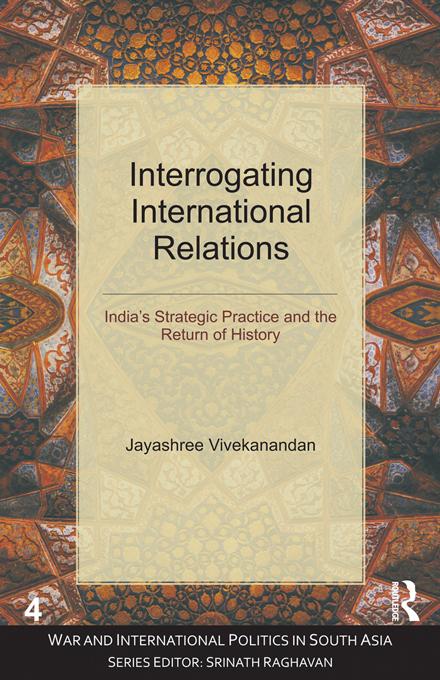
The book interrogates the disciplinary biases and firewalls that inform mainstream international relations today, and problematises the several tropes that have come to typify the strategic histories of post-colonial societies such as India. Questioning a range of long-held cultural representations on India, the book challenges such portrayals and underscores the centrality of context and contingency in any cultural explanation of state behaviour. It argues for a historico-cultural understanding of power and critiques IR’s tendency to usher in a selective ‘return of history’.
Taking two contrasting case studies from medieval Indian history, the book assesses the success and failure of the grand strategy pursued by the Mughal empire under Akbar. The study emphasises his grand strategy of accommodation, defined by the interplay of critical variables such as distance and the vast military labour market. The book also looks at his conscious attempt to indigenise power by projecting himself as the personification of the ideal Hindu king. This case study helps to contextualise the many critical transitions that occurred in international relations: from medieval empires to the modern state system, and from an indigenised, experiential understanding of power to its absolute, abstract manifestations in the colonial state.
Betala smidigt med kort, Klarna, Apple Pay eller Google Pay. Är du inte nöjd har du alltid 14 dagars ångerrätt. Läs mer i våra villkor. Har du några frågor, mejla oss på hello@memmo.org.
Memmo gör det enklare att plugga – var du än är i världen. Hos oss samlar du kursböcker och smarta studieverktyg på ett och samma ställe: sammanfattningar, quiz, poddar och flashcards. Och så Ted, din studiekompis som svarar på allt du undrar. Över 50 000 studenter pluggar redan här – byggt för att du ska lära dig snabbare och stressa mindre.