
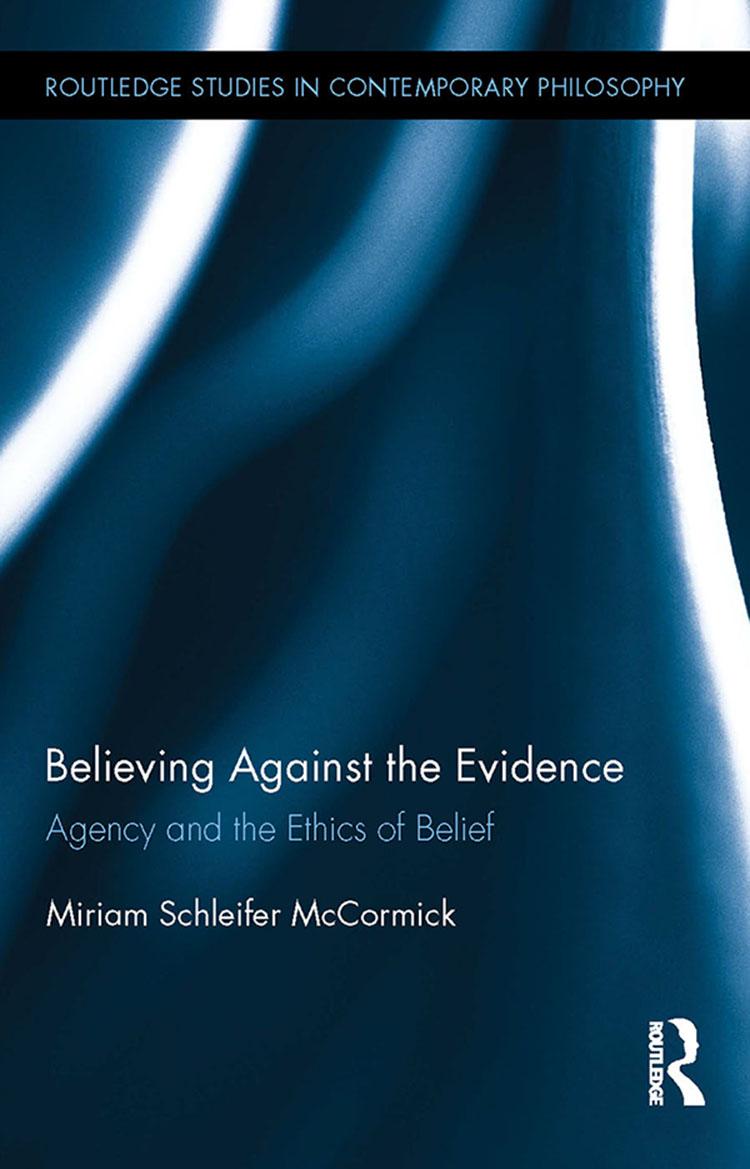
The question of whether it is ever permissible to believe on insufficient evidence has once again become a live question. Greater attention is now being paid to practical dimensions of belief, namely issues related to epistemic virtue, doxastic responsibility, and voluntarism.
In this book, McCormick argues that the standards used to evaluate beliefs are not isolated from other evaluative domains. The ultimate criteria for assessing beliefs are the same as those for assessing action because beliefs and actions are both products of agency. Two important implications of this thesis, both of which deviate from the dominant view in contemporary philosophy, are 1) it can be permissible (and possible) to believe for non-evidential reasons, and 2) we have a robust control over many of our beliefs, a control sufficient to ground attributions of responsibility for belief.
Betala smidigt med kort, Klarna, Apple Pay eller Google Pay. Är du inte nöjd har du alltid 14 dagars ångerrätt. Läs mer i våra villkor. Har du några frågor, mejla oss på hello@memmo.org.
Memmo gör det enklare att plugga – var du än är i världen. Hos oss samlar du kursböcker och smarta studieverktyg på ett och samma ställe: sammanfattningar, quiz, poddar och flashcards. Och så Ted, din studiekompis som svarar på allt du undrar. Över 50 000 studenter pluggar redan här – byggt för att du ska lära dig snabbare och stressa mindre.