
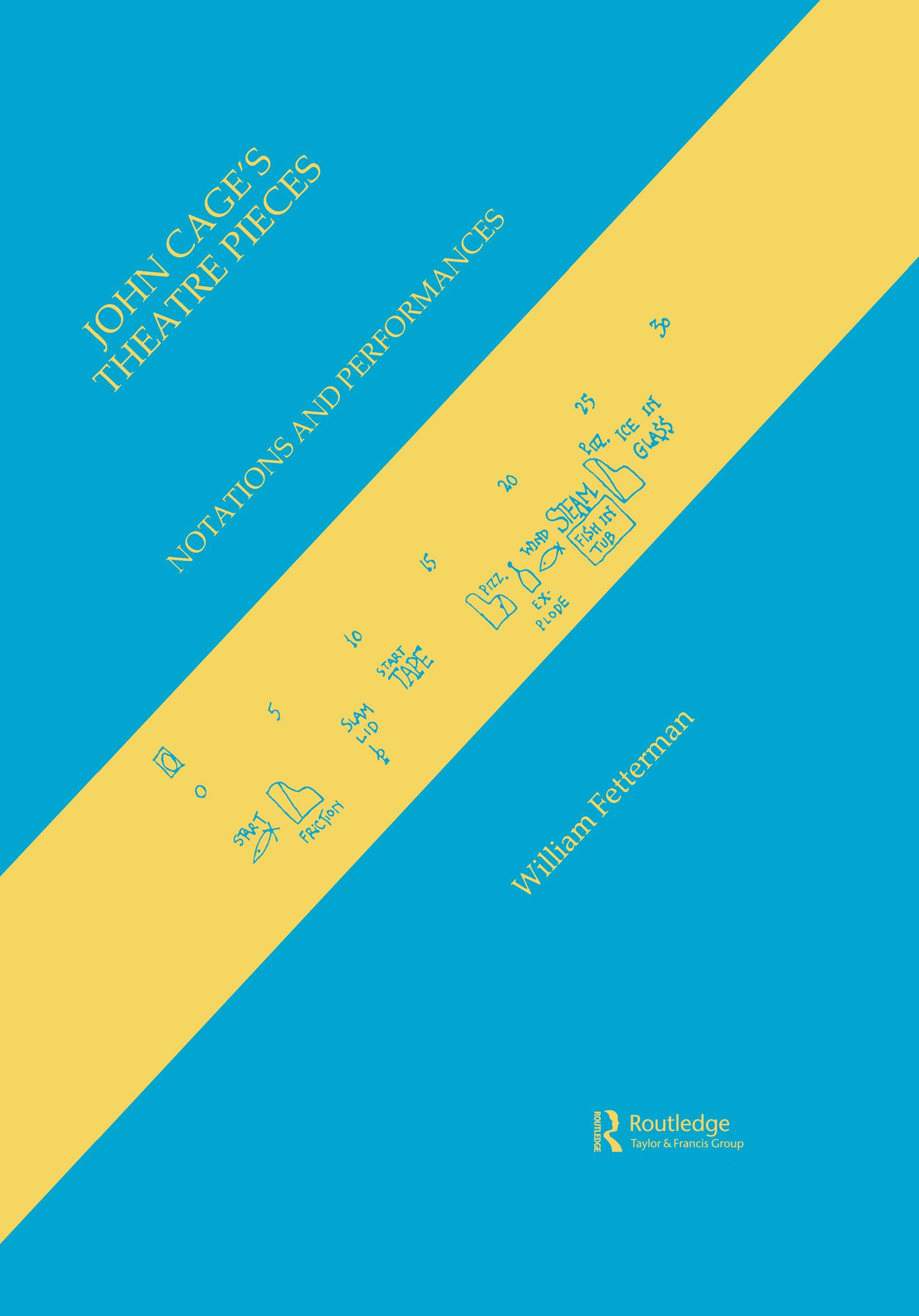
The experimental composer John Cage (1912-1992) is best known for his works in percussion, prepared piano, and electronic music, but he is also acknowledged to be one of the most significant figures in 20th century theatre. In Cage's work in theatre composition there is a blurring of the distinctions between music, dance, literature, art and everyday life. Here, William Fetterman examines the majority of those compositions by Cage which are audial as well as visual in content, beginning with his first work in this genre in 1952, and continuing through 1992.
Much of the information in this study comes from previously undocumented material discovered among the unpublished scores and notes of Cage and his frequent collaborator David Tudor, as well as author's interviews with Cage and with individuals closely associated with his work, including David Tudor, Merce Cunningham, Bonnie Bird, Mary Caroline Richards, and Ellsworth Snyder.
Betala smidigt med kort, Klarna, Apple Pay eller Google Pay. Är du inte nöjd har du alltid 14 dagars ångerrätt. Läs mer i våra villkor. Har du några frågor, mejla oss på hello@memmo.org.
Memmo gör det enklare att plugga – var du än är i världen. Hos oss samlar du kursböcker och smarta studieverktyg på ett och samma ställe: sammanfattningar, quiz, poddar och flashcards. Och så Ted, din studiekompis som svarar på allt du undrar. Över 50 000 studenter pluggar redan här – byggt för att du ska lära dig snabbare och stressa mindre.
Du kanske också gillar
Köp boken0