
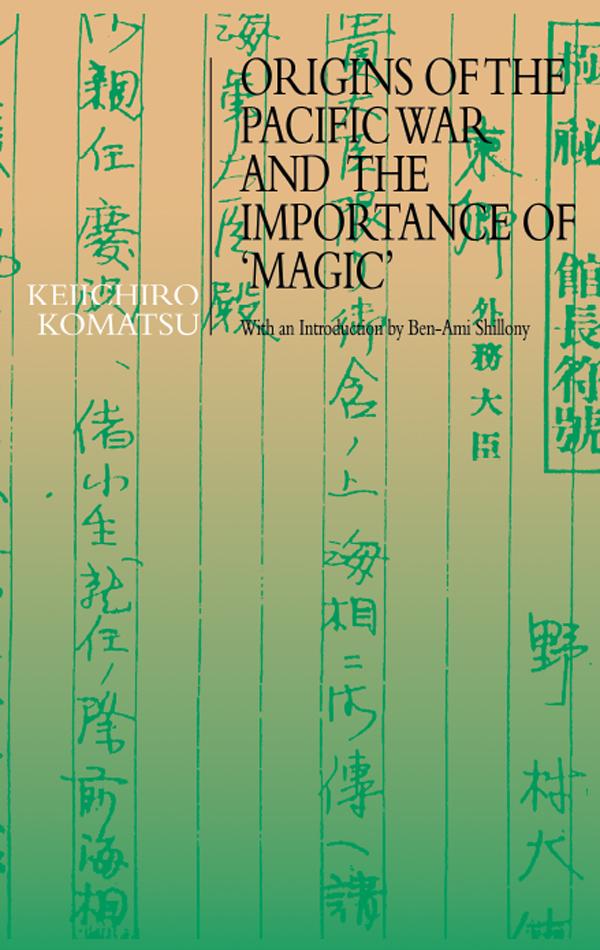
'Magic' was the name given to the American decoding of the secret Japanese codes used in diplomatic communications before and during the Pacific War of 1941-45. This important new work, presenting a Japanese perspective, argues for the first time that in the final phase of the eight months of US-Japan talks leading to the attack on Pearl Harbor, serious mistranslations in Magic were a significant factor in the cumulative effect of mutual misunderstandings which grew between the two sides over a longer period.
In spite of the number of historians who take the opposite point of view, the author argues that the efforts made by the participants on both sides to achieve a successful outcome and avert military conflict, or at least delay the outbreak of the war until the following March (1942), might have been much closer to achieving success than generally believed.
The mistranslations of Magic which led to the crisis in 1941 were influenced by misunderstanding and misperception, and the persistence of stereotypes and 'images' among the parties involved. The study of these kinds of phenomena has been an important part of the growth of the discipline of international relations since the Second World War.
Betala smidigt med kort, Klarna, Apple Pay eller Google Pay. Är du inte nöjd har du alltid 14 dagars ångerrätt. Läs mer i våra villkor. Har du några frågor, mejla oss på hello@memmo.org.
Memmo gör det enklare att plugga – var du än är i världen. Hos oss samlar du kursböcker och smarta studieverktyg på ett och samma ställe: sammanfattningar, quiz, poddar och flashcards. Och så Ted, din studiekompis som svarar på allt du undrar. Över 50 000 studenter pluggar redan här – byggt för att du ska lära dig snabbare och stressa mindre.
Du kanske också gillar
Köp boken0