
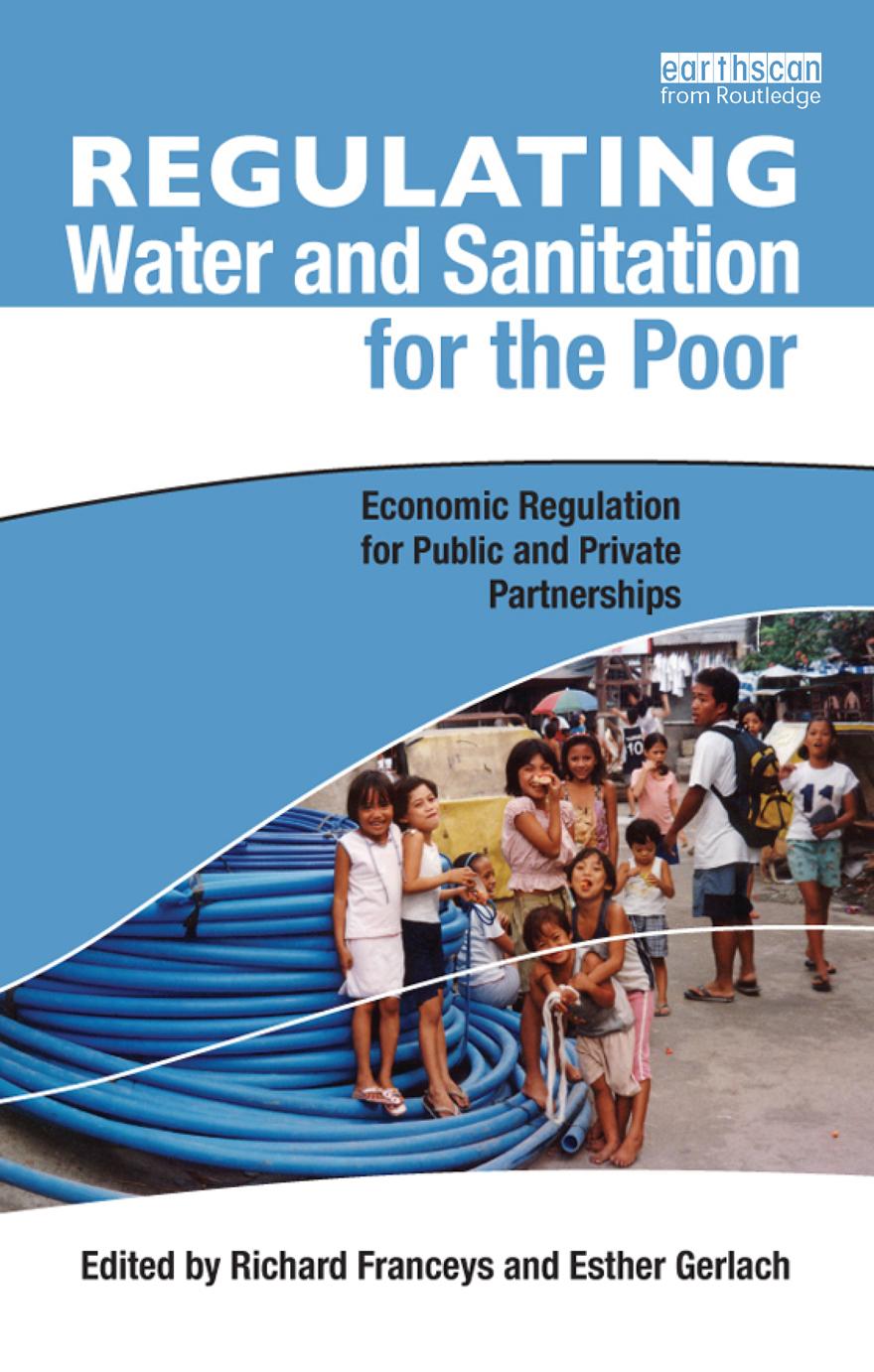
The aim of this book is to present the potential benefits as well as the challenges of introducing a more formal economic regulatory process into the urban water sector arena in lower-income countries. There is a particular focus upon the impact this may have on the poorest, the informal, slum and shanty dwellers of the rapidly growing cities. Economic regulation, usually introduced in the context of private operation of monopoly water supply, can deliver objectivity and transparency in the price-setting process for public as well as private providers. The book describes and analyses these issues through a consideration of ten country case studies. As a starting point, the current situation for the provision of water and sanitation services for the poorest through non-regulated public providers in India and Uganda is reviewed. Comparative chapters are then presented on Ghana, Philippines, Bolivia, Jordan, Zambia and Indonesia, all with varying degrees of private sector involvement and regulation. Finally the experiences of two richer countries are considered - Chile and England, countries with the longest experience of economic regulation and the 'most privatized' suppliers. In all cases there is a focus on the very necessary role of customer involvement in price-setting and service monitoring and on the role of alternative (private) service providers.
Betala smidigt med kort, Klarna, Apple Pay eller Google Pay. Är du inte nöjd har du alltid 14 dagars ångerrätt. Läs mer i våra villkor. Har du några frågor, mejla oss på hello@memmo.org.
Memmo gör det enklare att plugga – var du än är i världen. Hos oss samlar du kursböcker och smarta studieverktyg på ett och samma ställe: sammanfattningar, quiz, poddar och flashcards. Och så Ted, din studiekompis som svarar på allt du undrar. Över 50 000 studenter pluggar redan här – byggt för att du ska lära dig snabbare och stressa mindre.
Du kanske också gillar
Köp boken0