
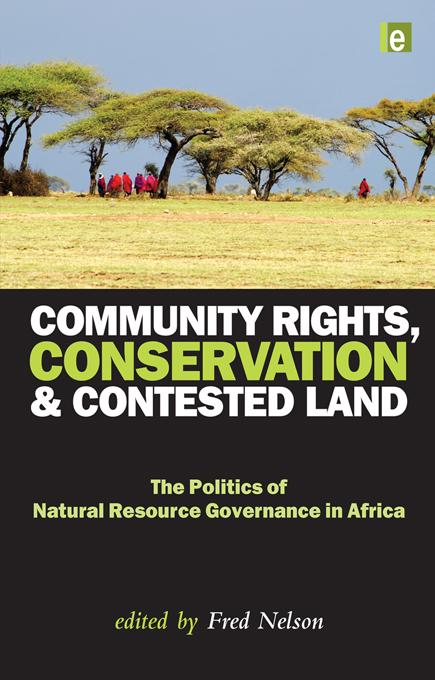
Natural resource governance is central to the outcomes of biodiversity conservation efforts and to patterns of economic development, particularly in resource-dependent rural communities. The institutional arrangements that define natural resource governance are outcomes of political processes, whereby numerous groups with often-divergent interests negotiate for access to and control over resources. These political processes determine the outcomes of resource governance reform efforts, such as widespread attempts to decentralize or devolve greater tenure over land and resources to local communities.
This volume examines the political dynamics of natural resource governance processes through a range of comparative case studies across east and southern Africa. These cases include both local and national settings, and examine issues such as land rights, tourism development, wildlife conservation, participatory forest management, and the impacts of climate change, and are drawn from both academics and field practitioners working across the region.
Published with IUCN, The Bradley Fund for the Environment, SASUSG and Norwegian Ministry of Foreign Affairs
Betala smidigt med kort, Klarna, Apple Pay eller Google Pay. Är du inte nöjd har du alltid 14 dagars ångerrätt. Läs mer i våra villkor. Har du några frågor, mejla oss på hello@memmo.org.
Memmo gör det enklare att plugga – var du än är i världen. Hos oss samlar du kursböcker och smarta studieverktyg på ett och samma ställe: sammanfattningar, quiz, poddar och flashcards. Och så Ted, din studiekompis som svarar på allt du undrar. Över 50 000 studenter pluggar redan här – byggt för att du ska lära dig snabbare och stressa mindre.