
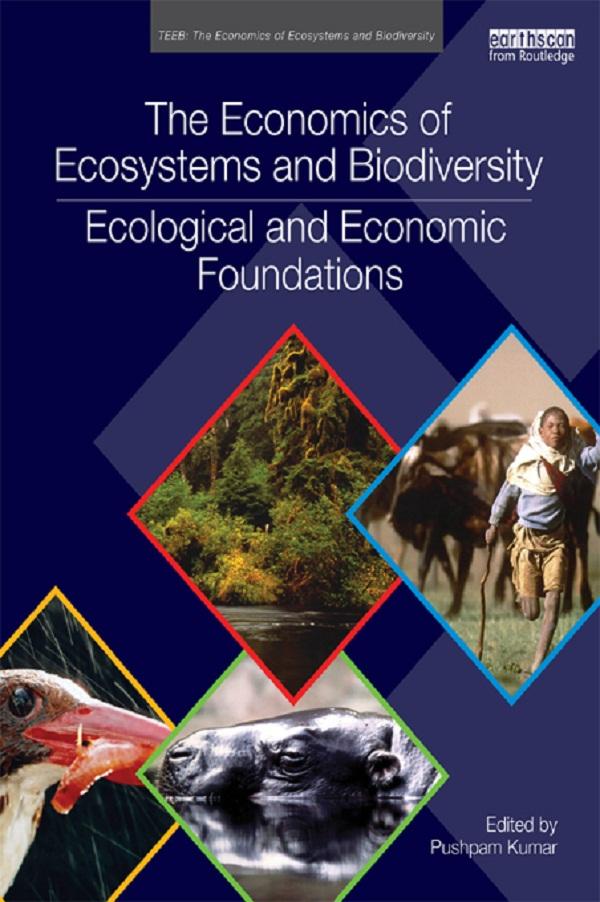
Human well-being relies critically on ecosystem services provided by nature. Examples include water and air quality regulation, nutrient cycling and decomposition, plant pollination and flood control, all of which are dependent on biodiversity. They are predominantly public goods with limited or no markets and do not command any price in the conventional economic system, so their loss is often not detected and continues unaddressed and unabated. This in turn not only impacts human well-being, but also seriously undermines the sustainability of the economic system.
It is against this background that TEEB: The Economics of Ecosystems and Biodiversity project was set up in 2007 and led by the United Nations Environment Programme to provide a comprehensive global assessment of economic aspects of these issues. This book, written by a team of international experts, represents the scientific state of the art, providing a comprehensive assessment of the fundamental ecological and economic principles of measuring and valuing ecosystem services and biodiversity, and showing how these can be mainstreamed into public policies.
This volume and subsequent TEEB outputs will provide the authoritative knowledge and guidance to drive forward the biodiversity conservation agenda for the next decade.
Betala smidigt med kort, Klarna, Apple Pay eller Google Pay. Är du inte nöjd har du alltid 14 dagars ångerrätt. Läs mer i våra villkor. Har du några frågor, mejla oss på hello@memmo.org.
Memmo gör det enklare att plugga – var du än är i världen. Hos oss samlar du kursböcker och smarta studieverktyg på ett och samma ställe: sammanfattningar, quiz, poddar och flashcards. Och så Ted, din studiekompis som svarar på allt du undrar. Över 50 000 studenter pluggar redan här – byggt för att du ska lära dig snabbare och stressa mindre.