
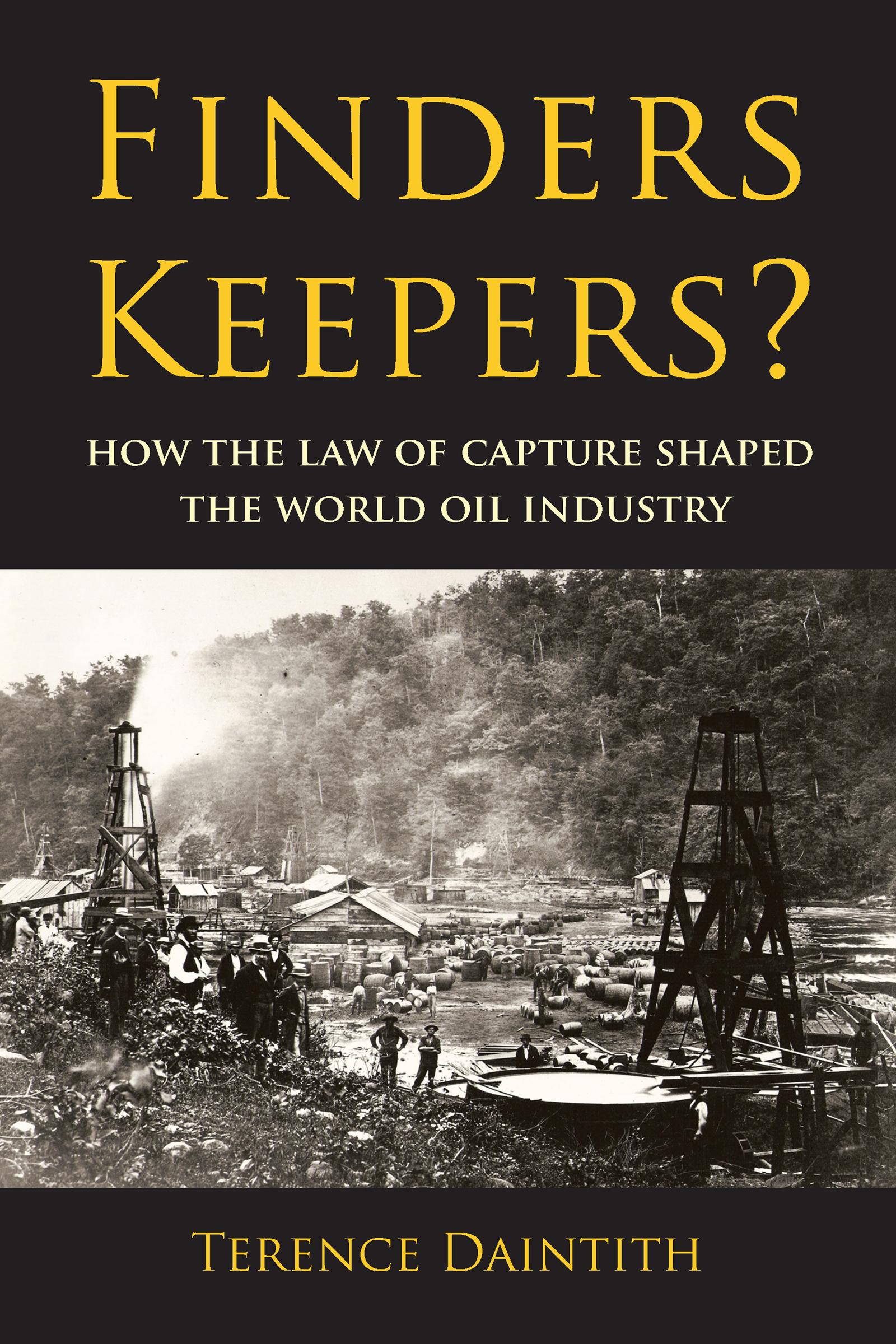
Since the beginnings of the oil industry, production activity has been governed by the 'law of capture,' dictating that one owns the oil recovered from one's property even if it has migrated from under neighboring land. This 'finders keepers' principle has been excoriated by foreign critics as a 'law of the jungle' and identified by American commentators as the root cause of the enormous waste of oil and gas resulting from US production methods in the first half of the twentieth century. Yet while in almost every other country the law of capture is today of marginal significance, it continues in full vigour in the United States, with potentially wasteful results.
In this richly documented account, Terence Daintith adopts a historical and comparative perspective to show how legal rules, technical knowledge (or the lack of it) and political ideas combined to shape attitudes and behavior in the business of oil production, leading to the original adoption of the law of capture, its consolidation in the United States, and its marginalization elsewhere.
Betala smidigt med kort, Klarna, Apple Pay eller Google Pay. Är du inte nöjd har du alltid 14 dagars ångerrätt. Läs mer i våra villkor. Har du några frågor, mejla oss på hello@memmo.org.
Memmo gör det enklare att plugga – var du än är i världen. Hos oss samlar du kursböcker och smarta studieverktyg på ett och samma ställe: sammanfattningar, quiz, poddar och flashcards. Och så Ted, din studiekompis som svarar på allt du undrar. Över 50 000 studenter pluggar redan här – byggt för att du ska lära dig snabbare och stressa mindre.