
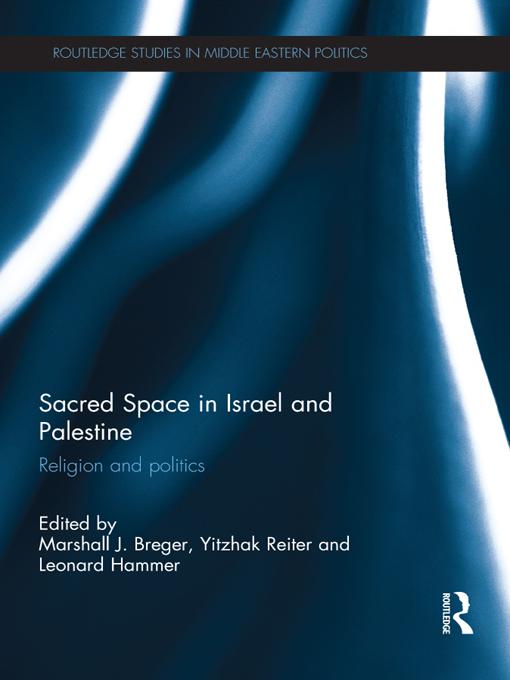
Religion and religious nationalism have long played a central role in many ethnic and national conflicts, and the importance of religion to national identity means that territorial disputes can often focus on the contestation of holy places and sacred territory. Looking at the case of Israel and Palestine, this book highlights the nexus between religion and politics through the process of classifying holy places, giving them meaning and interpreting their standing in religious and civil law, within governmental policy, and within international and local communities.
Written by a team of renowned scholars from within and outside the region, this book follows on from Holy Places in the Israeli-Palestinian Conflict: Confrontation and Co-existence to provide an insightful look into the politics of religion and space. Examining Jerusalem’s holy basin from a variety of perspectives and disciplines, it provides unique insights into the way Jewish, Christian and Muslim authorities, scholars and jurists regard sacred space and the processes, grass roots and official, by which spaces become holy in the eyes of particular communities. Filling an important gap in the literature on Middle East peacemaking, the book will be of interest to scholars and students of the Middle East conflict, conflict resolution, political science, urban studies and history of religion.
Betala smidigt med kort, Klarna, Apple Pay eller Google Pay. Är du inte nöjd har du alltid 14 dagars ångerrätt. Läs mer i våra villkor. Har du några frågor, mejla oss på hello@memmo.org.
Memmo gör det enklare att plugga – var du än är i världen. Hos oss samlar du kursböcker och smarta studieverktyg på ett och samma ställe: sammanfattningar, quiz, poddar och flashcards. Och så Ted, din studiekompis som svarar på allt du undrar. Över 50 000 studenter pluggar redan här – byggt för att du ska lära dig snabbare och stressa mindre.