
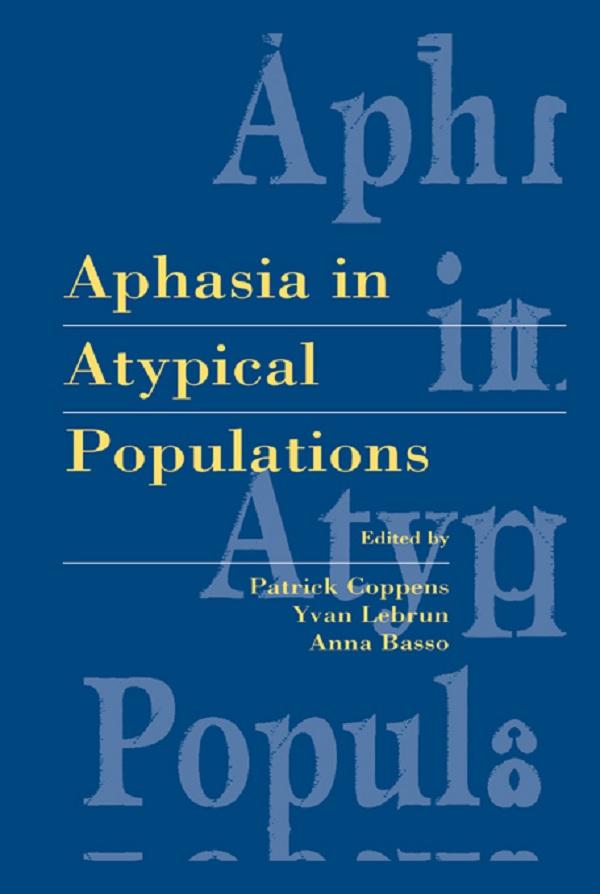
Theory and research in aphasiology have typically concentrated on a limited population--right-handed adult monolinguals whose language uses an alphabetic code. Bilingual individuals, ideographical code users, and children (among others) have been separated out. This book examines the available data from these "atypical" aphasics, asking whether what makes them different has a significant effect on language representation and processing in the brain. Each chapter reviews literature pertinent to a given population and explores whether (and potentially how) these populations differ from the "typical" aphasic population. The ultimate goal is to better understand whether the model of language used in aphasiology can be extended to these "atypical" populations, or conversely, whether significant differences merit the development of a new model.
Betala smidigt med kort, Klarna, Apple Pay eller Google Pay. Är du inte nöjd har du alltid 14 dagars ångerrätt. Läs mer i våra villkor. Har du några frågor, mejla oss på hello@memmo.org.
Memmo gör det enklare att plugga – var du än är i världen. Hos oss samlar du kursböcker och smarta studieverktyg på ett och samma ställe: sammanfattningar, quiz, poddar och flashcards. Och så Ted, din studiekompis som svarar på allt du undrar. Över 75 000 studenter pluggar redan här – byggt för att du ska lära dig snabbare och stressa mindre.