
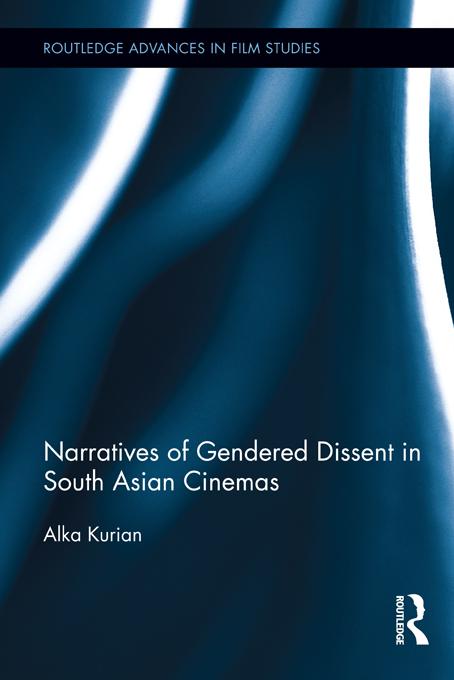
This book conducts a post-colonial, gendered investigation of women-centred South Asian films. In these films, the narrative becomes an act of political engagement and a site of feminist struggle: a map that weaves together multiple strands of subjectivity—gender, caste, race, class, religion, and colonialism. The book explores the cinematic construction of an oppositional narrative of feminist dissent with a view to elaborate a historical understanding and theorisation of the ‘materiality and politics’ of the everyday struggle of Indian women. The book analyzes the ways that ‘cultural workers’ have tended to use subversive narratives as a tool of resistance. Narratives that are political, ideological, classed, raced and gendered offer the focus of this exploration. Through strategies of disclosure and documentation of memory, personal experiences, and imaginary events shaped by the larger historical, political, and cultural contexts, these discursive texts engage in the processes of struggle against a plethora of oppression: caste, class, religion, patriarchal, sexual, and (neo)colonial. The study looks at the manner in which, through their creative and aesthetic interventions, South Asian film makers enable the articulation of an alternative gendered subjectivity as well as constitute the ground for personal and collective empowerment. Films discussed include Shyam Benegal’s Nishaant, Nandita Das’ Firaaq, Beate Arnestad’s My Daughter the Terrorist, and Sarah Gavron’s Brick Lane.
Betala smidigt med kort, Klarna, Apple Pay eller Google Pay. Är du inte nöjd har du alltid 14 dagars ångerrätt. Läs mer i våra villkor. Har du några frågor, mejla oss på hello@memmo.org.
Memmo gör det enklare att plugga – var du än är i världen. Hos oss samlar du kursböcker och smarta studieverktyg på ett och samma ställe: sammanfattningar, quiz, poddar och flashcards. Och så Ted, din studiekompis som svarar på allt du undrar. Över 50 000 studenter pluggar redan här – byggt för att du ska lära dig snabbare och stressa mindre.