
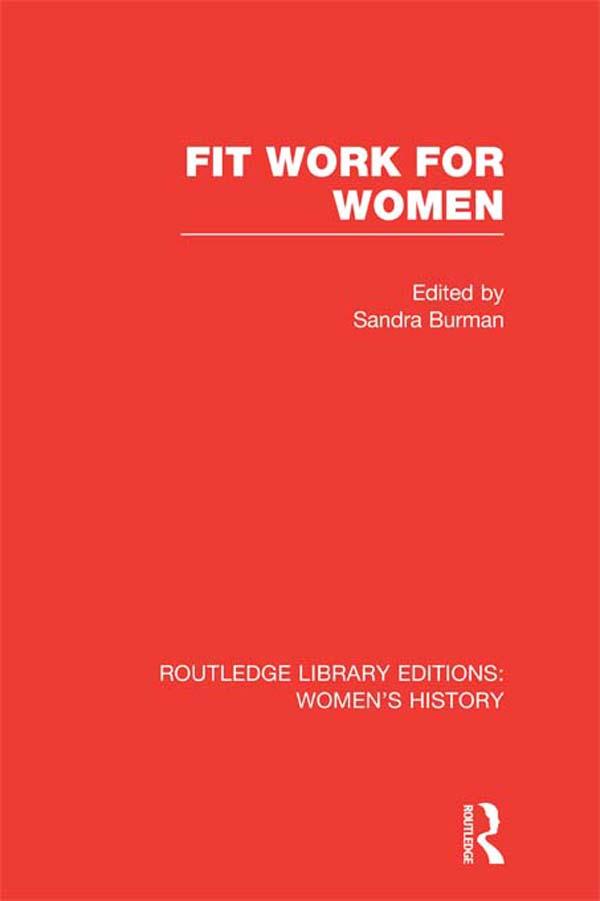
This book presents a collection of papers which discuss the origins of the domestic ideal and its effects on activities usually undertaken by women: not only on women’s wage work, but also on activities either not defined as work or accorded an ambiguous status. It discusses the formation of the ideology of domesticity, philanthropy and its effects on official policy and on women, landladies in the nineteenth and twentieth centuries, working-class radical suffragists, and Labour Party and trade union attitudes to feminists.
Modern society of 1979, when the book was first published, is analysed in a discussion of militancy and acquiescence among women wage workers, a look at how and why the legal system reinforces activity specialisation according to gender, and an examination of why both pre-pre-war capitalism and the modern Welfare State have been unable to meet the needs of dependents. This collection reflects the increasing recognition that in order to understand women’s roles today, it is necessary to examine not only their current manifestations, but also their origins and early development.
Betala smidigt med kort, Klarna, Apple Pay eller Google Pay. Är du inte nöjd har du alltid 14 dagars ångerrätt. Läs mer i våra villkor. Har du några frågor, mejla oss på hello@memmo.org.
Memmo gör det enklare att plugga – var du än är i världen. Hos oss samlar du kursböcker och smarta studieverktyg på ett och samma ställe: sammanfattningar, quiz, poddar och flashcards. Och så Ted, din studiekompis som svarar på allt du undrar. Över 50 000 studenter pluggar redan här – byggt för att du ska lära dig snabbare och stressa mindre.