
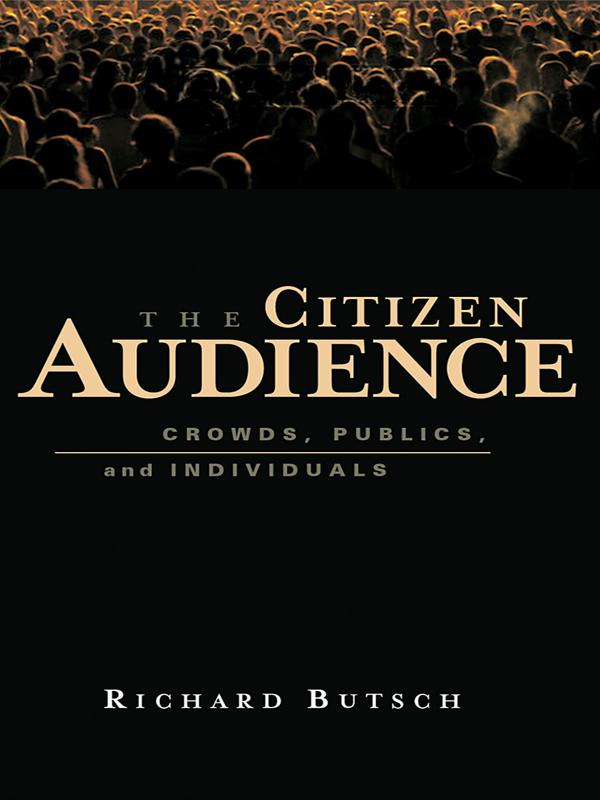
In The Citizen Audience, Richard Butsch explores the cultural and political history of audiences in the United States from the nineteenth century to the present. He demonstrates that, while attitudes toward audiences have shifted over time, Americans have always judged audiences against standards of good citizenship.
From descriptions of tightly packed crowds in early American theaters to the contemporary reports of distant, anonymous Internet audiences, Butsch examines how audiences were represented in contemporary discourse. He explores a broad range of sources on theater, movies, propaganda, advertising, broadcast journalism, and much more. Butsch discovers that audiences were characterized according to three recurrent motifs: as crowds and as isolated individuals in a mass, both of which were considered bad, and as publics which were considered ideal audiences. These images were based on and reinforced class and other social hierarchies. At times though, subordinate groups challenged their negative characterization in these images, and countered with their own interpretations.
A remarkable work of cultural criticism and media history, this book is essential reading for anyone seeking an historical understanding of how audiences, media and entertainment function in the American cultural and political imagination.
Betala smidigt med kort, Klarna, Apple Pay eller Google Pay. Är du inte nöjd har du alltid 14 dagars ångerrätt. Läs mer i våra villkor. Har du några frågor, mejla oss på hello@memmo.org.
Memmo gör det enklare att plugga – var du än är i världen. Hos oss samlar du kursböcker och smarta studieverktyg på ett och samma ställe: sammanfattningar, quiz, poddar och flashcards. Och så Ted, din studiekompis som svarar på allt du undrar. Över 50 000 studenter pluggar redan här – byggt för att du ska lära dig snabbare och stressa mindre.