
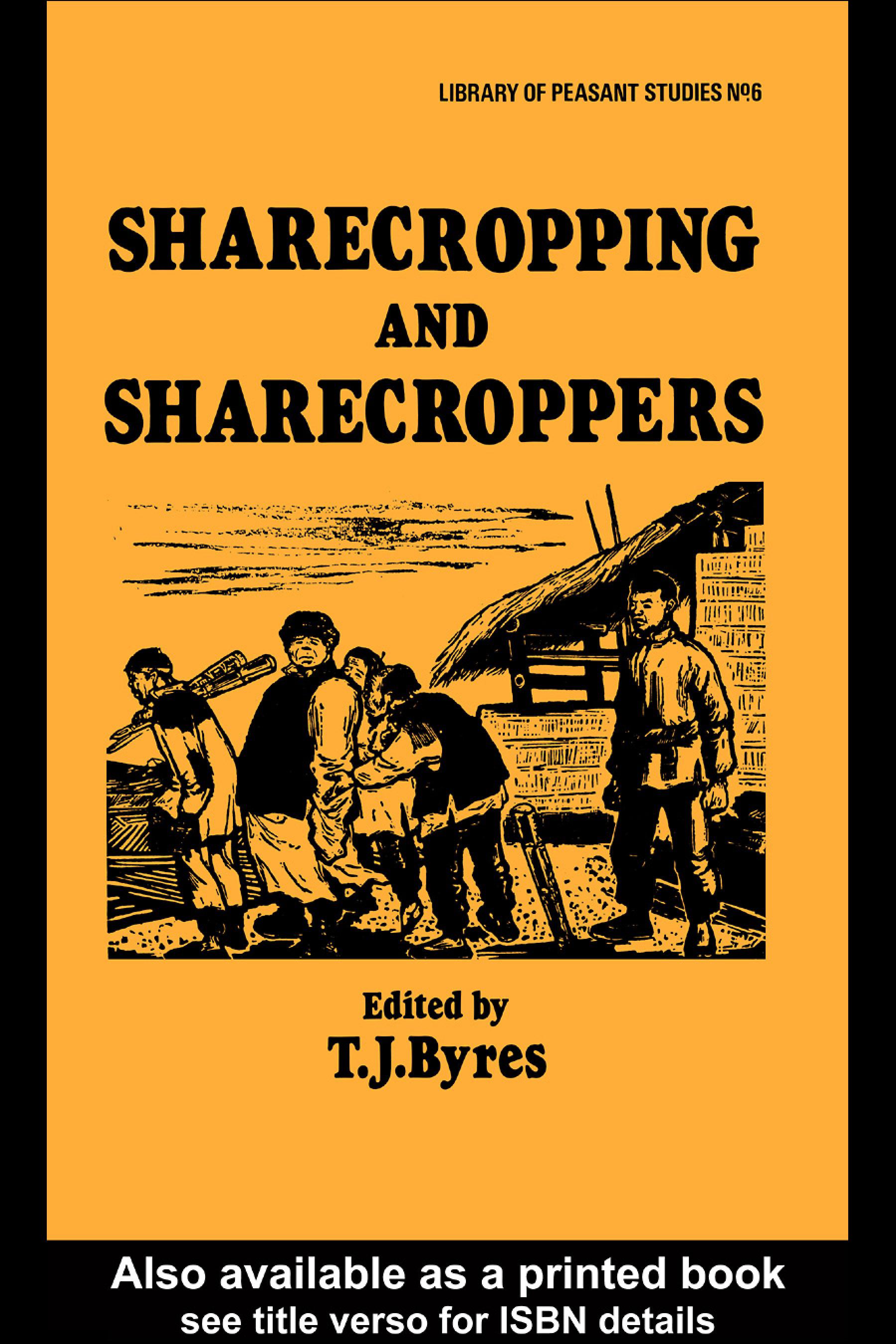
First Published in 1983. Of all the social relationships that exist in the countryside in contemporary poor countries, and which have existed in the past in ‘developed’ countries, that of share tenancy is among the most significant and the most fascinating. It is, and has been, geographically widespread, varied in its manifestations, and historically tenacious. Sharecropping has been singled out frequently in land reform programmes as a candidate for elimination. Yet it persists, often in disguised form. It raises difficult theoretical issues, which have attracted the attention of some of the outstanding economists—from Adam Smith, through John Stuart Mill, Karl Marx, and Alfred Marshall—and which remain contentious. Sharecroppers, moreover, have sometimes been involved in important political movements in the countryside. This, too, has given rise to considerable debate. In this double special number of the Journal of Peasant Studies, these varied issues are given extensive and rigorous treatment within a predominantly political economy framework. Sharecropping and sharecroppers are examined both in general terms, in a number of theoretical contributions, and in a rich variety of regional contexts, in which their specific manifestations emerge.
Betala smidigt med kort, Klarna, Apple Pay eller Google Pay. Är du inte nöjd har du alltid 14 dagars ångerrätt. Läs mer i våra villkor. Har du några frågor, mejla oss på hello@memmo.org.
Memmo gör det enklare att plugga – var du än är i världen. Hos oss samlar du kursböcker och smarta studieverktyg på ett och samma ställe: sammanfattningar, quiz, poddar och flashcards. Och så Ted, din studiekompis som svarar på allt du undrar. Över 50 000 studenter pluggar redan här – byggt för att du ska lära dig snabbare och stressa mindre.
Du kanske också gillar
Köp boken0