
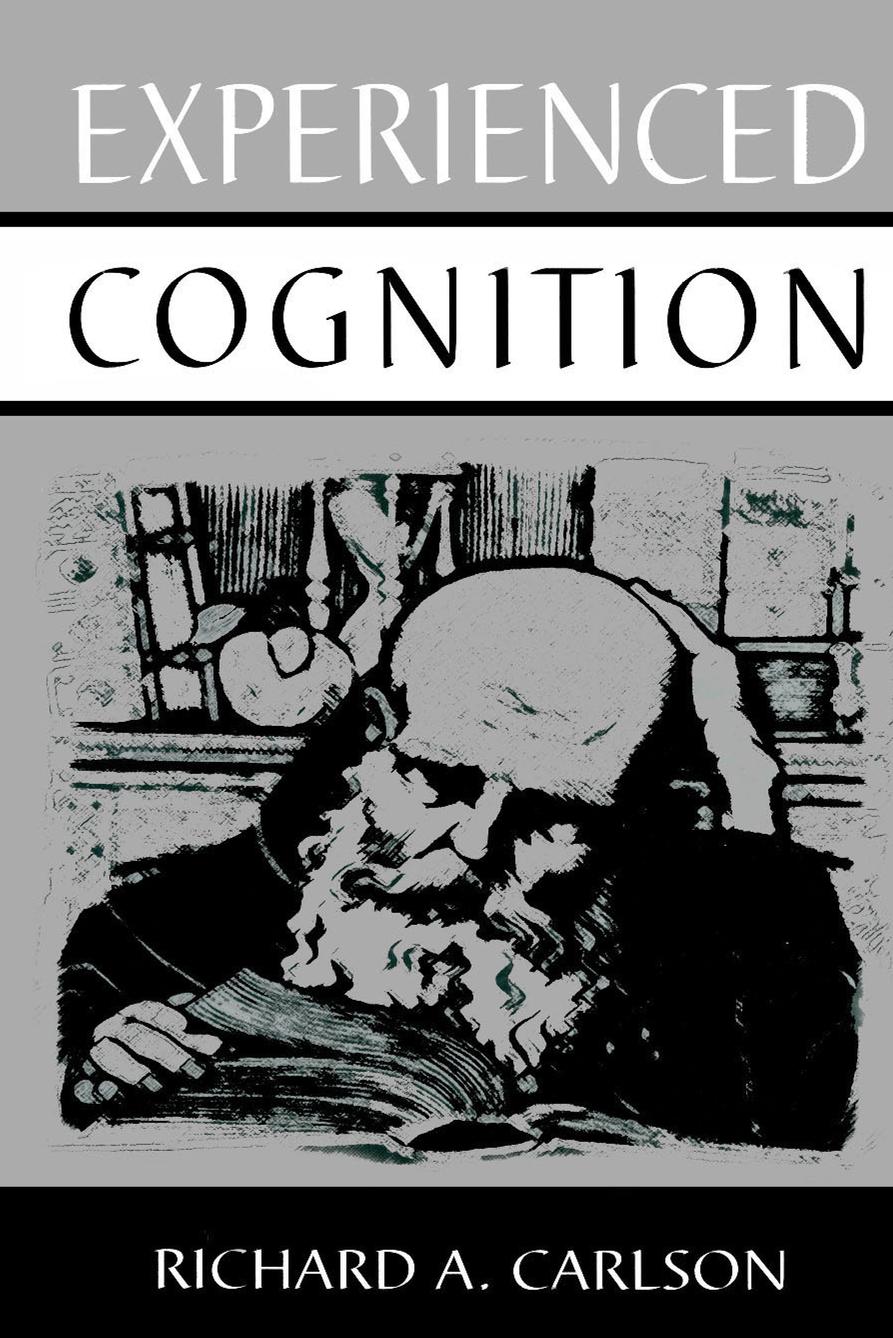
This volume presents a theoretical framework for understanding consciousness and learning. Drawing on work in cognitive psychology and philosophy, this framework begins with the observation that to be conscious is literally to have a point of view. From this starting point, the book develops a descriptive scheme that allows perceptual, symbolic, and emotional awareness to be discussed in common theoretical terms, compatible with a computational view of the mind. A central theme is our experience of ourselves as agents, consciously controlling activities situated in environments. In contrast to previous theories of consciousness, the experienced cognition framework emphasizes the changes in conscious control as individuals acquire skills.
The book is divided into four parts. The first introduces the central themes and places them in the context of information-processing theory and empirical research on cognitive skill. The second develops the theoretical framework, emphasizing the unity of perceptual, symbolic, and emotional awareness and the relation of conscious to nonconscious processes. The third applies the experienced cognition framework to a variety of topics in cognitive psychology, including working memory, problem solving, and reasoning. It also includes discussions of everyday action, skill, and expertise, focusing on changes in conscious control with increasing fluency. The last concludes the book by evaluating the recent debate on the "cognitive unconscious" and implicit cognition from the perspective of experienced cognition, and considering the prospects for a cognitive psychology focused on persons.
This book addresses many of the issues raised in philosophical treatments of consciousness from the point of view of empirical cognitive psychology. For example, the structure of conscious mental states is addressed by considering how to describe them in terms of variables suitable for information-processing theory. Understanding conscious states in this way also provides a basis for developing empirical hypotheses, for example, about the relation of emotion and cognition, about the apparent "mindlessness" of skilled activity, and about the nature and role of goals in guiding activity. Criticisms of the computational view of mind are addressed by showing that the role of first-person perspectives in cognition can be described and investigated in theoretical terms compatible with a broadly-conceived information-processing theory of cognition.
Betala smidigt med kort, Klarna, Apple Pay eller Google Pay. Är du inte nöjd har du alltid 14 dagars ångerrätt. Läs mer i våra villkor. Har du några frågor, mejla oss på hello@memmo.org.
Memmo gör det enklare att plugga – var du än är i världen. Hos oss samlar du kursböcker och smarta studieverktyg på ett och samma ställe: sammanfattningar, quiz, poddar och flashcards. Och så Ted, din studiekompis som svarar på allt du undrar. Över 50 000 studenter pluggar redan här – byggt för att du ska lära dig snabbare och stressa mindre.