
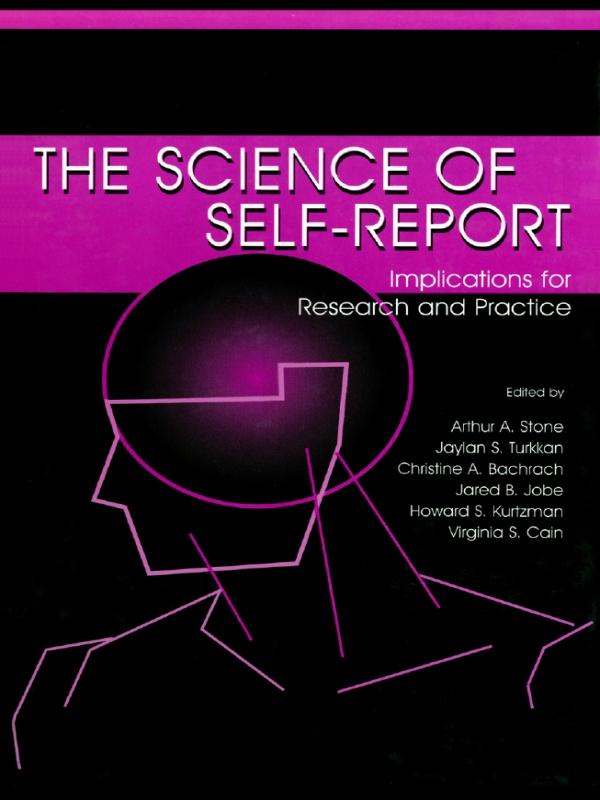
Rigorous methodological techniques have been developed in the last decade to improve the reliability and accuracy of self reports from research volunteers and patients about their pain, mood, substance abuse history, or dietary habits. This book presents cutting-edge research on optimal methods for obtaining self-reported information for use in the evaluation of scientific hypothesis, in therapeutic interventions, and in the development of prognostic indicators.
ALTERNATE BLURB:
Self-reports constitute critically important data for research and practice in many fields. As the chapters in this volume document, psychological and social processes influence the storage and recall of self-report information. There are conditions under which self-reports should be readily accepted by the clinician or researcher, and other conditions where healthy scepticism is required. The chapters demonstrate methods for improving the accuracy of self-reports, ranging from fine-tuning interviews and questionnaires to employing emerging technologies to collect data in ways that minimize bias and encourage accurate reporting.
Representing a diverse group of disciplines including sociology, law, psychology, and medicine, the distinguished authors offer crucial food for thought to all those whose work depends on the accurate self-reports of others.
Betala smidigt med kort, Klarna, Apple Pay eller Google Pay. Är du inte nöjd har du alltid 14 dagars ångerrätt. Läs mer i våra villkor. Har du några frågor, mejla oss på hello@memmo.org.
Memmo gör det enklare att plugga – var du än är i världen. Hos oss samlar du kursböcker och smarta studieverktyg på ett och samma ställe: sammanfattningar, quiz, poddar och flashcards. Och så Ted, din studiekompis som svarar på allt du undrar. Över 50 000 studenter pluggar redan här – byggt för att du ska lära dig snabbare och stressa mindre.