
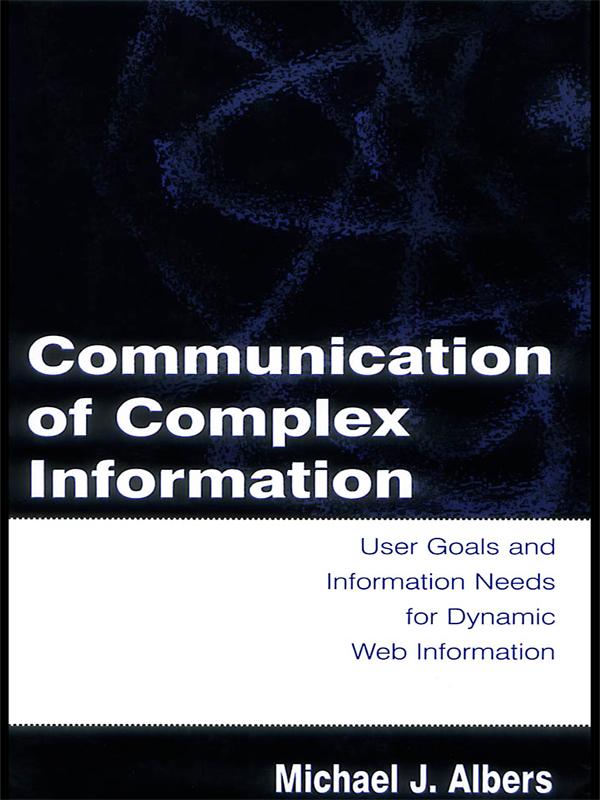
The amount of information available for any realistic complex situation is likely to overwhelm most users, as well as stymie any designer tasked with presenting the information. Providing large amounts of information in a coherent and usable format remains an unresolved problem. Choosing, structuring, formatting, and displaying information to allow easy access and to facilitate understanding are critical issues for effective design. To build an effective design that addresses complex information needs, one must look at research from psychology, sociology, human computer interaction, and technical communication, and develop a complete picture of the situation.
This book develops a foundation for analysis and design of the approaches to providing complex information in real-world situations. Author Michael Albers takes the view that the content of the information system is the most important component. As such, this volume presents the analysis that needs to be done before the interface is designed and before content is created. It strives to provide clear understanding of how the user thinks and what the user needs, so interface operation, content, and presentation can maximize their respective potentials in communicating with a user.
This volume is intended for technical communicators, human-computer interaction designers, and information designers. It will also be useful for system designers and researchers, and those studying adaptive hypertext and related topics.
Betala smidigt med kort, Klarna, Apple Pay eller Google Pay. Är du inte nöjd har du alltid 14 dagars ångerrätt. Läs mer i våra villkor. Har du några frågor, mejla oss på hello@memmo.org.
Memmo gör det enklare att plugga – var du än är i världen. Hos oss samlar du kursböcker och smarta studieverktyg på ett och samma ställe: sammanfattningar, quiz, poddar och flashcards. Och så Ted, din studiekompis som svarar på allt du undrar. Över 50 000 studenter pluggar redan här – byggt för att du ska lära dig snabbare och stressa mindre.