
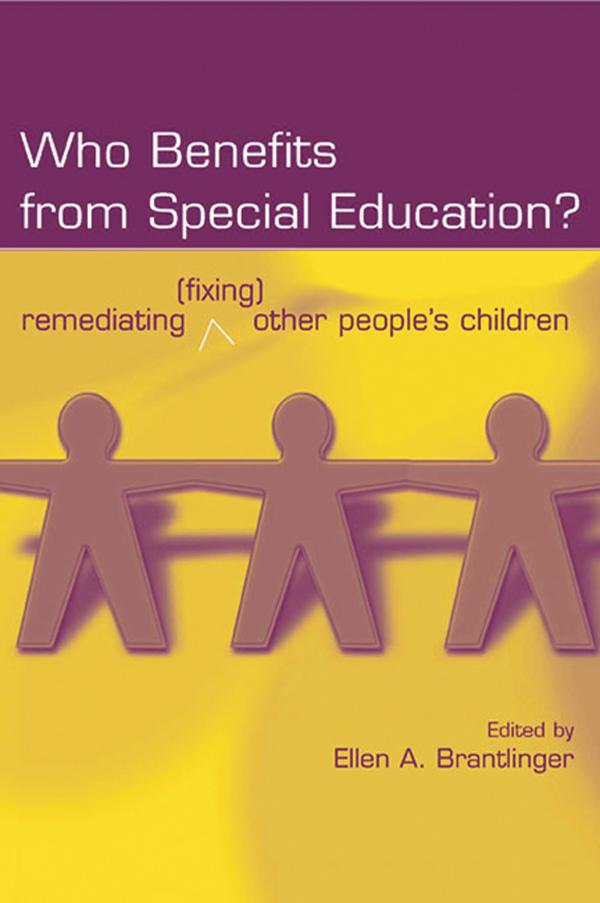
Who Benefits From Special Education?: Remediating (Fixing) Other People's Children addresses the negative consequences of labeling and separating education for students with "disabilities," the cultural biases inherent in the way that we view children's learning difficulties, the social construction of disability, the commercialization of special education, and related issues.
The theme that unifies the chapters is that tension exists between professional ideology and practice, and the wishes and expectations of the recipients of professional practice--children, adolescents, and adults with disabilities and their families. These voices have rarely taken center stage in formulating important decisions about the quality and characteristics of appropriate practice. The dominant view in the field of special education has been that disability is a problem in certain children, rather than an artifact that results from the general structure of schooling; it does not take into consideration the voices of people with disabilities, their families, or their teachers. Offering an alternative perspective, this book deconstructs mainstream special education ideologies and highlights the personal perspectives of students, families, and front-line professionals such as teachers and mental health personnel. It is particularly relevant for special education/disabilities studies graduate students and faculty and for readers in general education, curriculum studies, instruction theory, and critical theory.
Betala smidigt med kort, Klarna, Apple Pay eller Google Pay. Är du inte nöjd har du alltid 14 dagars ångerrätt. Läs mer i våra villkor. Har du några frågor, mejla oss på hello@memmo.org.
Memmo gör det enklare att plugga – var du än är i världen. Hos oss samlar du kursböcker och smarta studieverktyg på ett och samma ställe: sammanfattningar, quiz, poddar och flashcards. Och så Ted, din studiekompis som svarar på allt du undrar. Över 50 000 studenter pluggar redan här – byggt för att du ska lära dig snabbare och stressa mindre.