
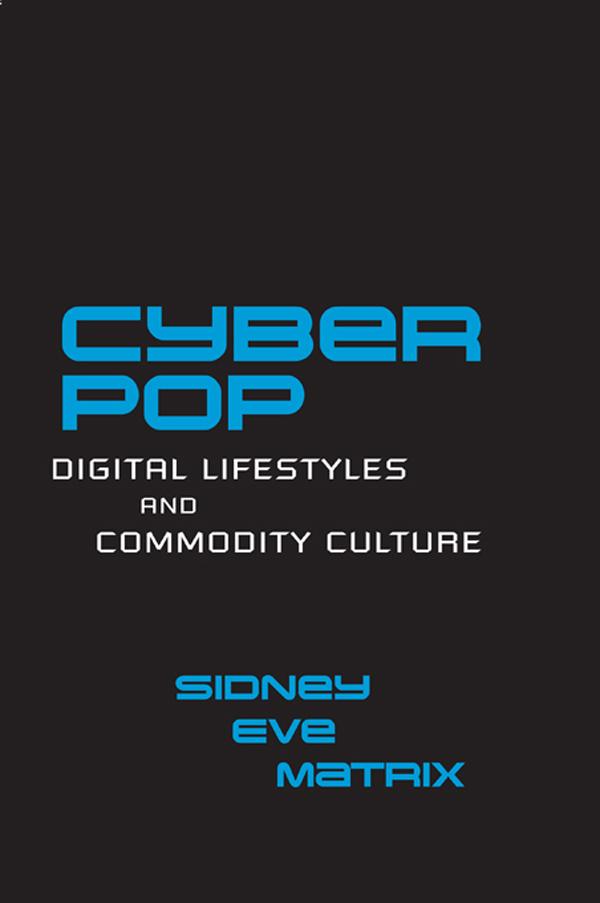
Cyberpop is an analysis of cyberculture and its popular cultural productions. The study begins with a Foucaultian model of cyberculture as a discursive formation, and explains how some key concepts (such as 'virtuality,' 'speed,' and 'Connectivity') operate as a conceptual architecture network linking technologies to information and individual subjects. The chapters then each focus on a particular cyberfiguration, including Hollywood films (GATTACA,The Matrix), popular literature (William Gibson's Neuromancer, Scott Westerfeld's Polymorph), advertising for digital products and services (Apple Computer's '1984/McIntosh' campaign, AT&T's 'mLife' campaign), digital artworks (including virtual females such as Motorola's 'Mya' and Elite Modeling Agency's 'Webbie Tookay,' and work by visual artist Daniel Lee for Microsoft's 'Evolution' campaign), and video games (TombRaider). Each close reading illustrates the ways in which representations of digital lifestyles and identities - which typically fetishize computers and celebrate a 'high tech' aesthetic encourage participation in digital capitalism and commodity cyberculture. Matrix argues that popular representations of cyberculture often function as forms of social criticism that creatively inspire audiences to 'think different' (in the words of Mac advertising) about the consequences of the digitalization of everyday life.
Betala smidigt med kort, Klarna, Apple Pay eller Google Pay. Är du inte nöjd har du alltid 14 dagars ångerrätt. Läs mer i våra villkor. Har du några frågor, mejla oss på hello@memmo.org.
Memmo gör det enklare att plugga – var du än är i världen. Hos oss samlar du kursböcker och smarta studieverktyg på ett och samma ställe: sammanfattningar, quiz, poddar och flashcards. Och så Ted, din studiekompis som svarar på allt du undrar. Över 50 000 studenter pluggar redan här – byggt för att du ska lära dig snabbare och stressa mindre.