
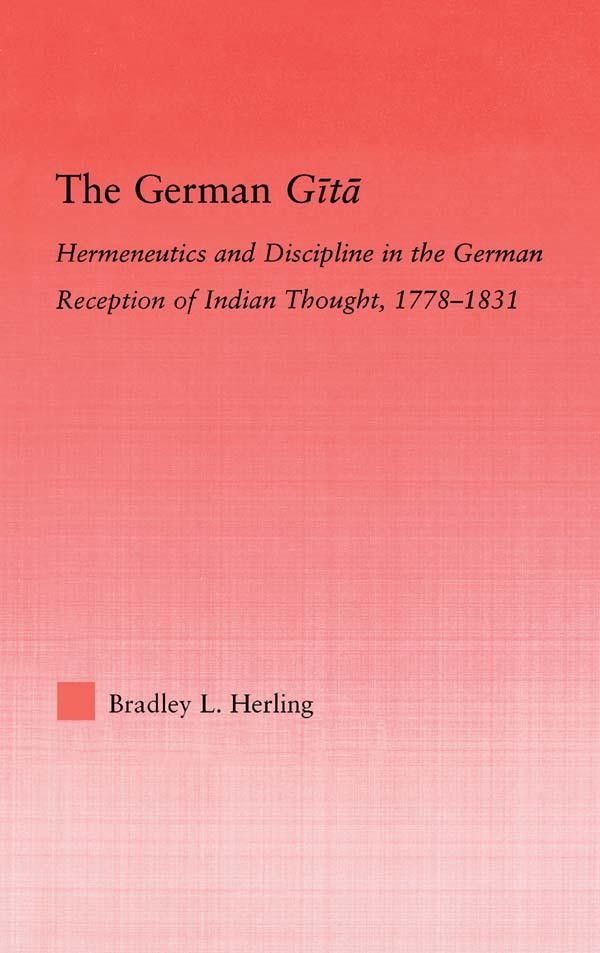
How did the Bhagavadgãtà first become an object of German philosophical and philological inquiry? How were its foundational concepts initially interpreted within German intellectual circles, and what does this episode in the history of cross-cultural encounter teach us about the status of comparative philosophy today? This book addresses these questions through a careful study of the figures who read, translated and interpreted the Bhagavadgãtà around the turn of the nineteenth century in Germany: J.G. Herder, F. Majer, F. Schlegel, A.W. Schlegel, W. von Humboldt, and G.W.F. Hegel. Methodologically, the study attends to the intellectual contexts and prejudices that framed the early reception of the text. But it also delves deeper by investigating the way these frameworks inflected the construction of the Bhagavadgãtà and its foundational concepts through the scholarly acts of excerpting, anthologization, and translation. Overall, the project contributes to the pluralization of Western philosophy and its history while simultaneously arguing for a continued critical alertness in cross-cultural comparison of philosophical and religious worldviews.
Betala smidigt med kort, Klarna, Apple Pay eller Google Pay. Är du inte nöjd har du alltid 14 dagars ångerrätt. Läs mer i våra villkor. Har du några frågor, mejla oss på hello@memmo.org.
Memmo gör det enklare att plugga – var du än är i världen. Hos oss samlar du kursböcker och smarta studieverktyg på ett och samma ställe: sammanfattningar, quiz, poddar och flashcards. Och så Ted, din studiekompis som svarar på allt du undrar. Över 50 000 studenter pluggar redan här – byggt för att du ska lära dig snabbare och stressa mindre.