
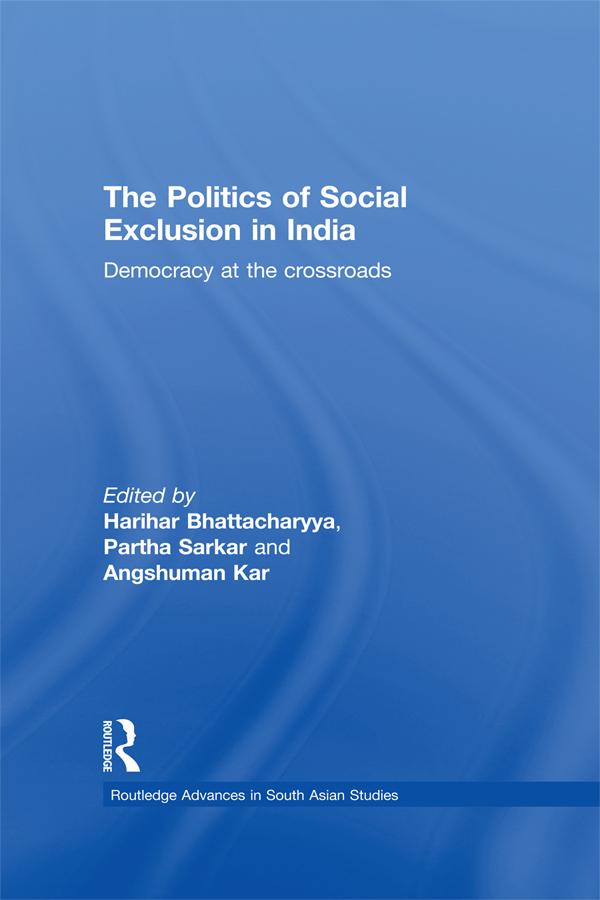
Social exclusion and inclusion remain issues of fundamental importance to democracy. Both exclusion and inclusion relate to the access to participation in the public realm, public goods and services for certain groups of people who are minorities, marginalized and deprived. Democratization has led to the inclusion of the previously excluded in the political process. While the problems of exclusion remain even in advanced Western countries in respect of the minorities of sorts, and the underprivileged, the problem of deep-rooted social and cultural exclusions is acute in post-colonial countries, including India. This book analyses social exclusions in India, which remain the most solid challenges to Indian democracy and development. Communal clashes, ethnic riots, political secessionist movements and extremist violence take place almost routinely, and are the outward manifestations of the entrenched culture of social exclusion in India. With its interdisciplinary approach, the book looks at the multidimensional problems of social exclusion and inclusion, providing a critical, comprehensive analysis of the problem and of potential solutions. The authors are experts in the fields of historical sociology, anthropology, political theory, social philosophy, economics and indigenous vernacular literature. Overall, the book offers an innovative theoretical perspective of the long-term issues facing contemporary Indian democracy.
Betala smidigt med kort, Klarna, Apple Pay eller Google Pay. Är du inte nöjd har du alltid 14 dagars ångerrätt. Läs mer i våra villkor. Har du några frågor, mejla oss på hello@memmo.org.
Memmo gör det enklare att plugga – var du än är i världen. Hos oss samlar du kursböcker och smarta studieverktyg på ett och samma ställe: sammanfattningar, quiz, poddar och flashcards. Och så Ted, din studiekompis som svarar på allt du undrar. Över 50 000 studenter pluggar redan här – byggt för att du ska lära dig snabbare och stressa mindre.