
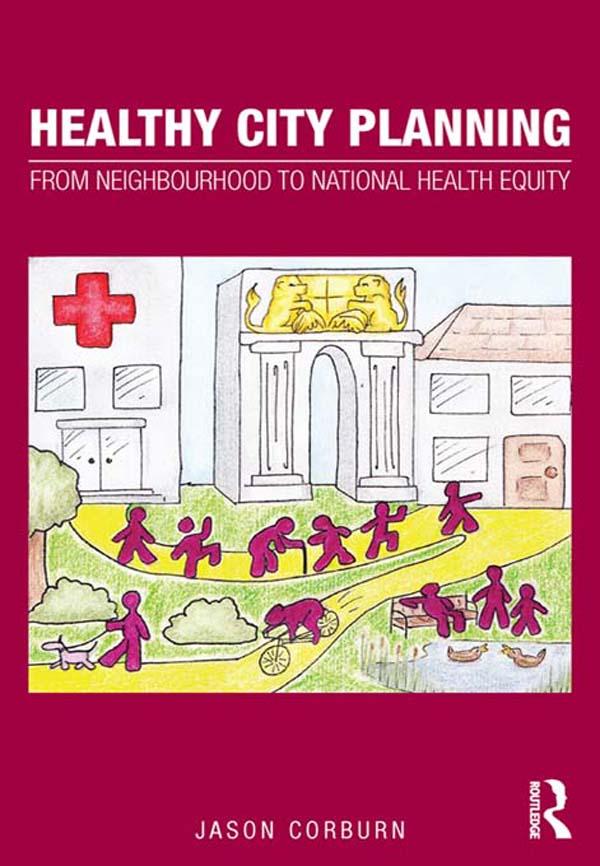
Healthy city planning means seeking ways to eliminate the deep and persistent inequities that plague cities. Yet, as Jason Corburn argues in this book, neither city planning nor public health is currently organized to ensure that today’s cities will be equitable and healthy.
Having made the case for what he calls ‘adaptive urban health justice’ in the opening chapter, Corburn briefly reviews the key events, actors, ideologies, institutions and policies that shaped and reshaped the urban public health and planning from the nineteenth century to the present day. He uses two frames to organize this historical review: the view of the city as a field site and as a laboratory.
In the second part of the book Corburn uses in-depth case studies of health and planning activities in Rio de Janeiro, Nairobi, and Richmond, California to explore the institutions, policies and practices that constitute healthy city planning. These case studies personify some of the characteristics of his ideal of adaptive urban health justice. Each begins with an historical review of the place, its policies and social movements around urban development and public health, and each is an example of the urban poor participating in, shaping, and being impacted by healthy city planning.
Betala smidigt med kort, Klarna, Apple Pay eller Google Pay. Är du inte nöjd har du alltid 14 dagars ångerrätt. Läs mer i våra villkor. Har du några frågor, mejla oss på hello@memmo.org.
Memmo gör det enklare att plugga – var du än är i världen. Hos oss samlar du kursböcker och smarta studieverktyg på ett och samma ställe: sammanfattningar, quiz, poddar och flashcards. Och så Ted, din studiekompis som svarar på allt du undrar. Över 75 000 studenter pluggar redan här – byggt för att du ska lära dig snabbare och stressa mindre.