
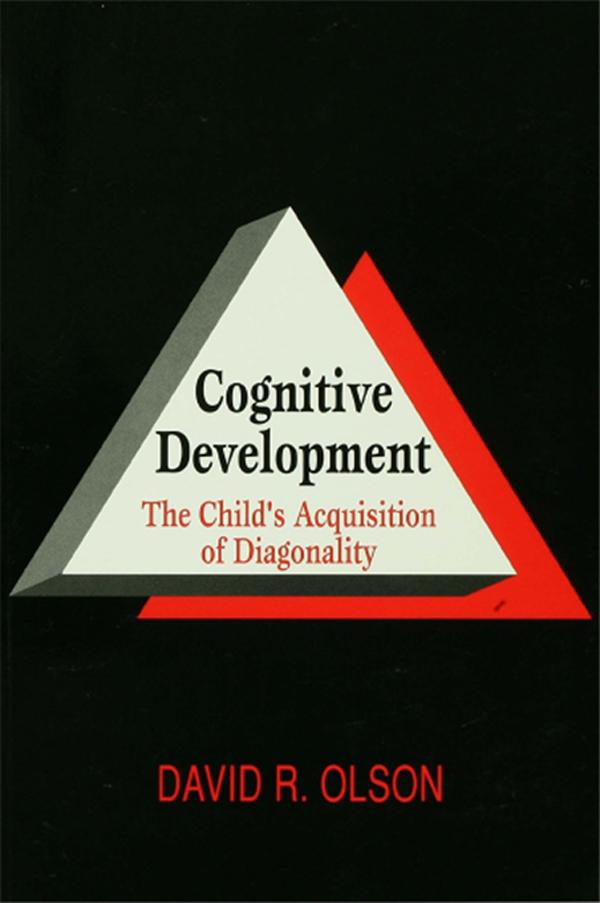
When this book was first published, David Olson was examining the developing representation and use of diagonals in the context of much larger questions, questions also explored by Vygotsky, Cassirer, Gombrich, and Bruner. These include such issues as conceptual development, conceptual change, and stage-like transitions in one's knowledge and belief. Some of these problems remain at virtually the same stage of solution to this day. Other problems have indeed been solved or at least come closer to solution, leading the author to think about the precise cognitive representations that allowed for the cognitive growth he examined in such scrupulous detail.
The author hopes that both readers and re-readers of this volume will be led to wonder -- as he did while working on the book -- just what there is about a simple diagonal that makes its reproduction so difficult. In so doing, readers will again be reminded of the remarkable resources that children bring to bear on their understanding of the world as well as the blind spots that no simple telling can quite fill in.
Betala smidigt med kort, Klarna, Apple Pay eller Google Pay. Är du inte nöjd har du alltid 14 dagars ångerrätt. Läs mer i våra villkor. Har du några frågor, mejla oss på hello@memmo.org.
Memmo gör det enklare att plugga – var du än är i världen. Hos oss samlar du kursböcker och smarta studieverktyg på ett och samma ställe: sammanfattningar, quiz, poddar och flashcards. Och så Ted, din studiekompis som svarar på allt du undrar. Över 50 000 studenter pluggar redan här – byggt för att du ska lära dig snabbare och stressa mindre.