
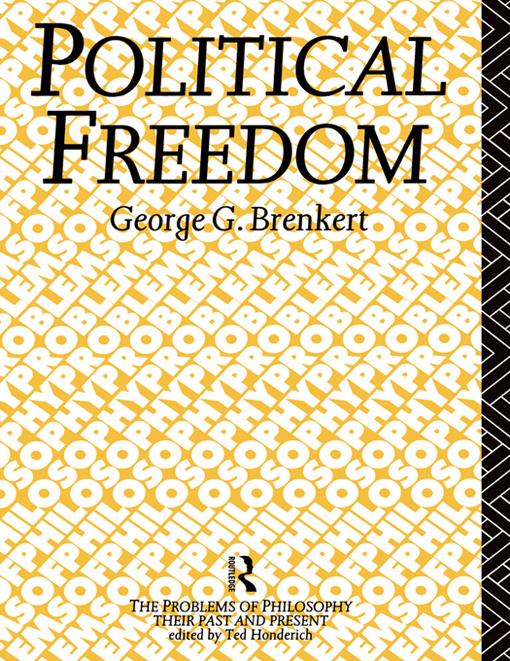
This book examines the underlying theoretical issues concerning the nature of political freedom. Arguing that most previous discussions of such freedom have been too narrowly focused, it explores both conservativism from Edmund Burke to its present resurgence, the radical tradition of Karl Marx, as well as the orthodox liberal model of freedom of John Locke, John Stuart Mill and Isaiah Berlin. Political Freedom argues that these three accounts of political freedom - conservative, liberal and radical - all have internal weaknesses which render them unsatisfactory.
In the second part of the book George Brenkert develops an alternative theory of political freedom. Using the guiding concept of empowerment, his model explores individual rights, democratic participation in government and workplace, and the need to provide the material and educational resources to allow individuals to effectively exercise their rights to self-determination. It is a clear and bold attack on the view that there is no link between freedom and power.
Betala smidigt med kort, Klarna, Apple Pay eller Google Pay. Är du inte nöjd har du alltid 14 dagars ångerrätt. Läs mer i våra villkor. Har du några frågor, mejla oss på hello@memmo.org.
Memmo gör det enklare att plugga – var du än är i världen. Hos oss samlar du kursböcker och smarta studieverktyg på ett och samma ställe: sammanfattningar, quiz, poddar och flashcards. Och så Ted, din studiekompis som svarar på allt du undrar. Över 50 000 studenter pluggar redan här – byggt för att du ska lära dig snabbare och stressa mindre.