
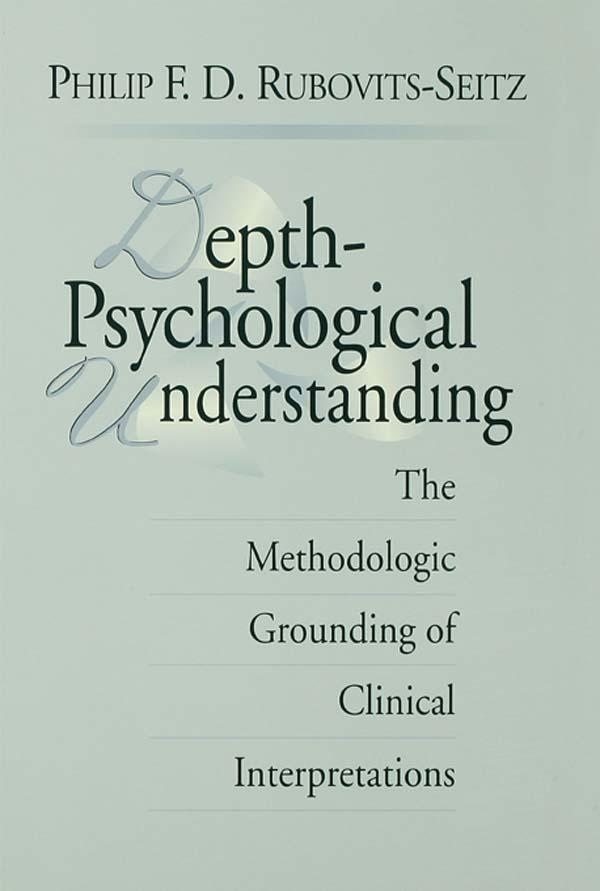
Although clinical interpretation originated with Freud, the latter's positivist preference for purely observational methods made him ambivalent toward interpretive methods. According to Rubovits-Seitz, the legacy of Freud's positivism still pervades clinical thinking and interferes with progress in investigating and improving interpretive methods. He reviews the paradigm shift in general science from positivism to postpositivism by way of demonstrating the compatibility of interpretive inquiry with a postpositivist approach.
Post-Freudian models of clinical interpretation are evaluated, andclinical methods of interpretation are compared with interpretive approachesin nonclinical fields. A detailed discussion of the neglected problem ofjustifying interpretations incorporates evaluations of specific justifyingprocedures and a case report illustrating applications of such methods. Thework concludes with a consideration of common but avoidable errors in clinicalinterpretation along with remedial strategies for dealing with them.
Following Depth-Psychological Understanding, clinicians may no longer take for granted the interpretive process and the accuracy of their own interpretations. Rubovits-Seitz's scholarly survey marks a major advance in comprehending the methodology of clinical interpretation and in setting forth both the problems and promise of interpretive methods.
Betala smidigt med kort, Klarna, Apple Pay eller Google Pay. Är du inte nöjd har du alltid 14 dagars ångerrätt. Läs mer i våra villkor. Har du några frågor, mejla oss på hello@memmo.org.
Memmo gör det enklare att plugga – var du än är i världen. Hos oss samlar du kursböcker och smarta studieverktyg på ett och samma ställe: sammanfattningar, quiz, poddar och flashcards. Och så Ted, din studiekompis som svarar på allt du undrar. Över 50 000 studenter pluggar redan här – byggt för att du ska lära dig snabbare och stressa mindre.