
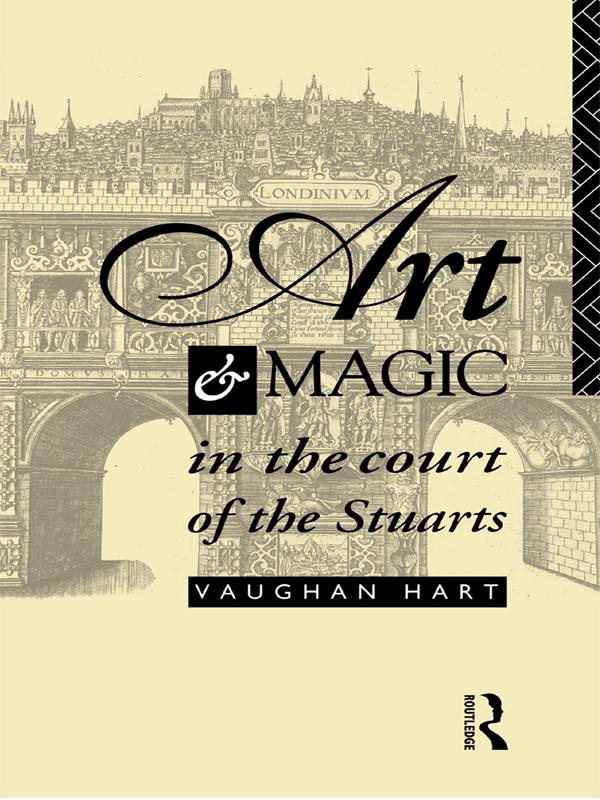
Spanning from the inauguration of James I in 1603 to the execution of Charles I in 1649, the Stuart court saw the emergence of a full expression of Renaissance culture in Britain. Hart examines the influence of magic on Renaissance art and how in its role as an element of royal propaganda, art was used to represent the power of the monarch and reflect his apparent command over the hidden forces of nature. Court artists sought to represent magic as an expression of the Stuart Kings' divine right, and later of their policy of Absolutism, through masques, sermons, heraldry, gardens, architecture and processions. As such, magic of the kind enshrined in Neoplatonic philosophy and the court art which expressed its cosmology, played their part in the complex causes of the Civil War and the destruction of the Stuart image which followed in its wake.
Betala smidigt med kort, Klarna, Apple Pay eller Google Pay. Är du inte nöjd har du alltid 14 dagars ångerrätt. Läs mer i våra villkor. Har du några frågor, mejla oss på hello@memmo.org.
Memmo gör det enklare att plugga – var du än är i världen. Hos oss samlar du kursböcker och smarta studieverktyg på ett och samma ställe: sammanfattningar, quiz, poddar och flashcards. Och så Ted, din studiekompis som svarar på allt du undrar. Över 50 000 studenter pluggar redan här – byggt för att du ska lära dig snabbare och stressa mindre.
Du kanske också gillar
Köp boken0