
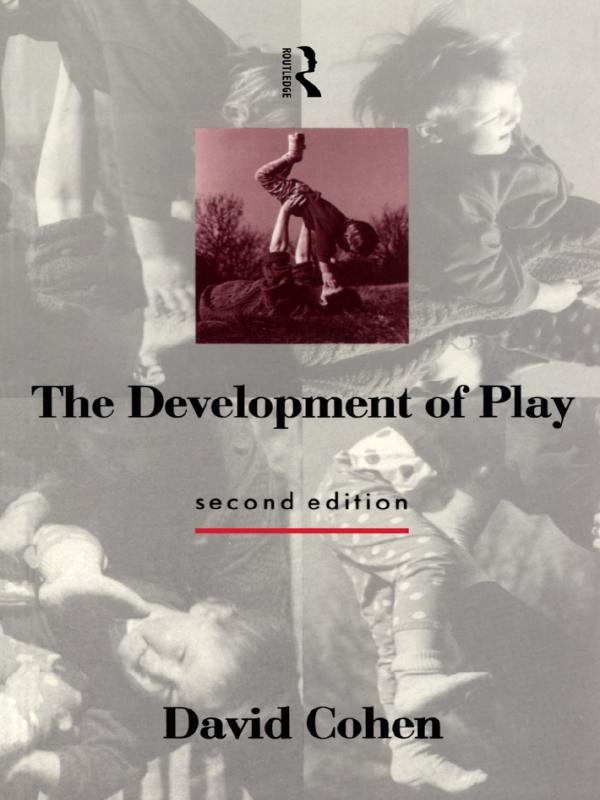
Play is an important part of our development. In playing, we learn to move, think, speak and imagine, as well as cope with other people. This second edition of The Development of Play addresses these key functions that play serves. David Cohen examines how children play with objects, with language, and most importantly, with each other and their parents. He goes on to ask why we stop playing, and looks at adult games. The Development of Play argues that psychology has accepted too uncritically the Victorian opposition of work and play, and argues that adults can learn to play more.
With its extensive account of recent work in this area, this book is the most up-to-date work on the importance of play and will be of interest to child psychologists, developmental psychologists, and a wide number of professionals involved with children.
Betala smidigt med kort, Klarna, Apple Pay eller Google Pay. Är du inte nöjd har du alltid 14 dagars ångerrätt. Läs mer i våra villkor. Har du några frågor, mejla oss på hello@memmo.org.
Memmo gör det enklare att plugga – var du än är i världen. Hos oss samlar du kursböcker och smarta studieverktyg på ett och samma ställe: sammanfattningar, quiz, poddar och flashcards. Och så Ted, din studiekompis som svarar på allt du undrar. Över 50 000 studenter pluggar redan här – byggt för att du ska lära dig snabbare och stressa mindre.