
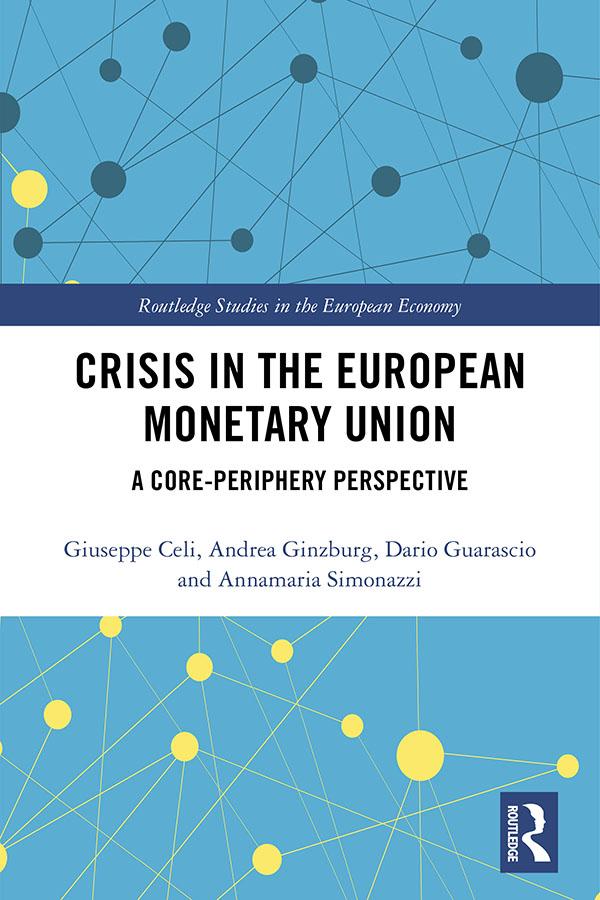
After decades of economic integration and EU enlargement, the economic geography of Europe has shifted, with new peripheries emerging and the core showing signs of fragmentation. This book examines the paths of the core and peripheral countries, with a focus on their diverse productive capabilities and their interdependence.
Crisis in the European Monetary Union: A Core-Periphery Perspective provides a new framework for analysing the economic crisis that has shaken the Eurozone countries. Its analysis goes beyond the short-term, to study the medium and long-term relations between ‘core’ countries (particularly Germany) and Southern European ‘peripheral’ countries. The authors argue that long-term sustainability means assigning the state a key role in guiding investment, which in turn implies industrial policies geared towards diversifying, innovating and strengthening the economic structures of peripheral countries to help them thrive.
Offering a fresh angle on the European crisis, this volume will appeal to students, academics and policymakers interested in the past, present and future construction of Europe.
Betala smidigt med kort, Klarna, Apple Pay eller Google Pay. Är du inte nöjd har du alltid 14 dagars ångerrätt. Läs mer i våra villkor. Har du några frågor, mejla oss på hello@memmo.org.
Memmo gör det enklare att plugga – var du än är i världen. Hos oss samlar du kursböcker och smarta studieverktyg på ett och samma ställe: sammanfattningar, quiz, poddar och flashcards. Och så Ted, din studiekompis som svarar på allt du undrar. Över 50 000 studenter pluggar redan här – byggt för att du ska lära dig snabbare och stressa mindre.