
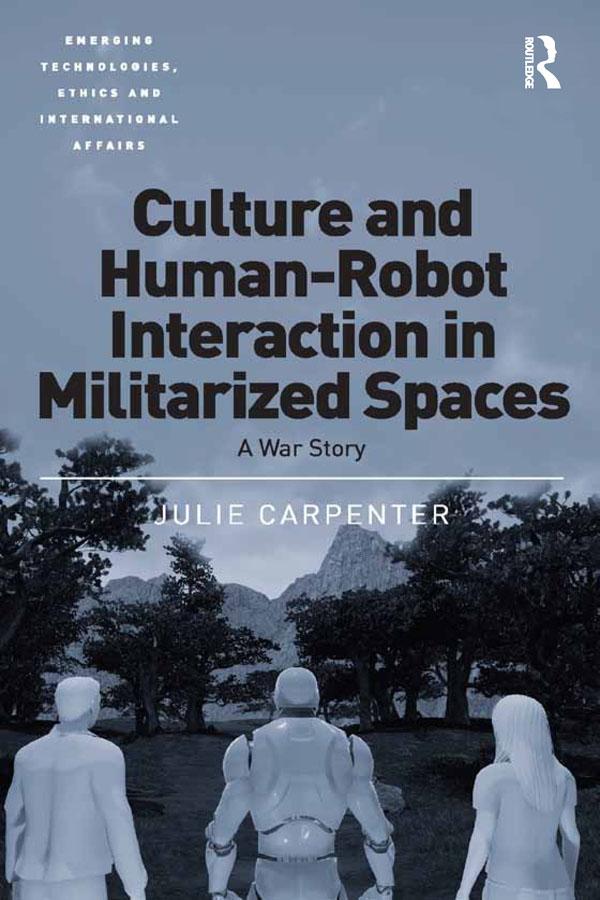
Explosive Ordnance Disposal (EOD) personnel are some of the most highly trained people in the military, with a job description that spans defusing unexploded ordnance to protecting VIP’s and state dignitaries. EOD are also one of the first military groups to work with robots every day. These robots have become an increasingly important tool in EOD work, enabling people to work at safer distances in many dangerous situations. Based on exploratory research investigating interactions between EOD personnel and the robots they use, this study richly describes the nuances of these reciprocal influences, especially those related to operator emotion associated with the robots. In particular, this book examines the activities, processes and contexts that influence or constrain everyday EOD human-robot interactions, what human factors are shaping the (robotic) technology and how people and culture are being changed by using it. The findings from this research have implications for future personnel training, and the refinement of robot design considerations for many fields that rely on critical small group communication and decision-making skills.
Betala smidigt med kort, Klarna, Apple Pay eller Google Pay. Är du inte nöjd har du alltid 14 dagars ångerrätt. Läs mer i våra villkor. Har du några frågor, mejla oss på hello@memmo.org.
Memmo gör det enklare att plugga – var du än är i världen. Hos oss samlar du kursböcker och smarta studieverktyg på ett och samma ställe: sammanfattningar, quiz, poddar och flashcards. Och så Ted, din studiekompis som svarar på allt du undrar. Över 50 000 studenter pluggar redan här – byggt för att du ska lära dig snabbare och stressa mindre.
Du kanske också gillar
Köp boken0