
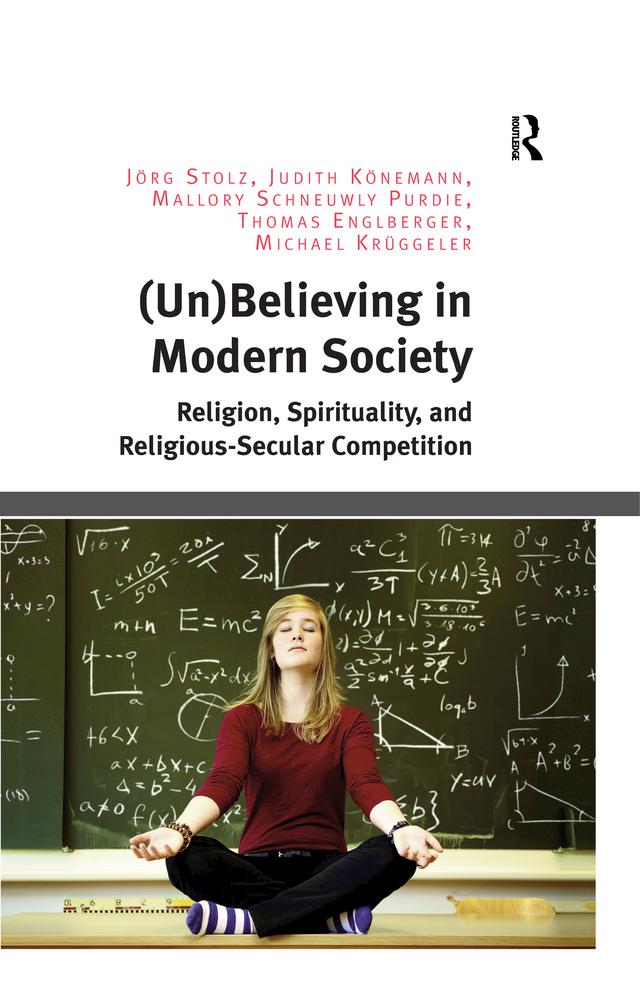
This landmark study in the sociology of religion sheds new light on the question of what has happened to religion and spirituality since the 1960s in modern societies. Exposing several analytical weaknesses of today's sociology of religion, (Un)Believing in Modern Society presents a new theory of religious-secular competition and a new typology of ways of being religious/secular. The authors draw on a specific European society (Switzerland) as their test case, using both quantitative and qualitative methodologies to show how the theory can be applied. Identifying four ways of being religious/secular in a modern society: 'institutional', 'alternative', 'distanced' and 'secular' they show how and why these forms have emerged as a result of religious-secular competition and describe in what ways all four forms are adapted to the current, individualized society.
Betala smidigt med kort, Klarna, Apple Pay eller Google Pay. Är du inte nöjd har du alltid 14 dagars ångerrätt. Läs mer i våra villkor. Har du några frågor, mejla oss på hello@memmo.org.
Memmo gör det enklare att plugga – var du än är i världen. Hos oss samlar du kursböcker och smarta studieverktyg på ett och samma ställe: sammanfattningar, quiz, poddar och flashcards. Och så Ted, din studiekompis som svarar på allt du undrar. Över 50 000 studenter pluggar redan här – byggt för att du ska lära dig snabbare och stressa mindre.