
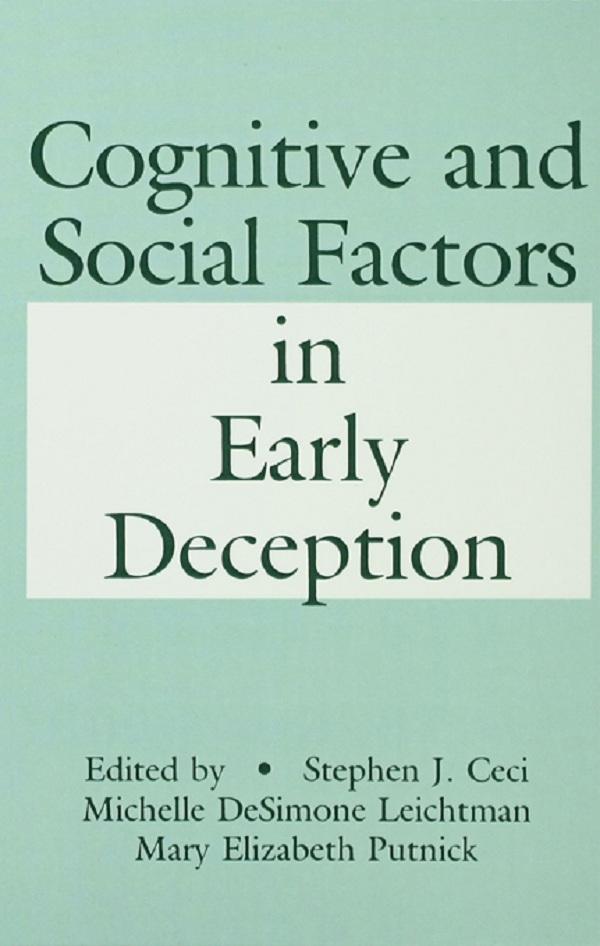
The understanding of early deception is important for both theoretical and practical purposes. Children's deceptive behaviors provide a window into their models and theories of mind. On a practical level, childhood deception poses challenges for the legal system as well as parents and schools.
In this volume, contributors from diverse areas of psychology -- social, cognitive, and developmental -- as well as philosophy and law examine the determinants of deception among preschoolers. In addition to a wealth of new empirical findings dealing with gender, motivation, and context in children's use of deception, evidence is provided for recursivity of awareness in children as young as three years of age. With chapters and commentaries written by leading scholars in the United States, England, and Australia, this book reflects a growing concern with ecological validity in developmental studies and may prompt rethinking of traditional models of mind based exclusively on data from laboratory experiments.
Betala smidigt med kort, Klarna, Apple Pay eller Google Pay. Är du inte nöjd har du alltid 14 dagars ångerrätt. Läs mer i våra villkor. Har du några frågor, mejla oss på hello@memmo.org.
Memmo gör det enklare att plugga – var du än är i världen. Hos oss samlar du kursböcker och smarta studieverktyg på ett och samma ställe: sammanfattningar, quiz, poddar och flashcards. Och så Ted, din studiekompis som svarar på allt du undrar. Över 50 000 studenter pluggar redan här – byggt för att du ska lära dig snabbare och stressa mindre.
Du kanske också gillar
Köp boken0