
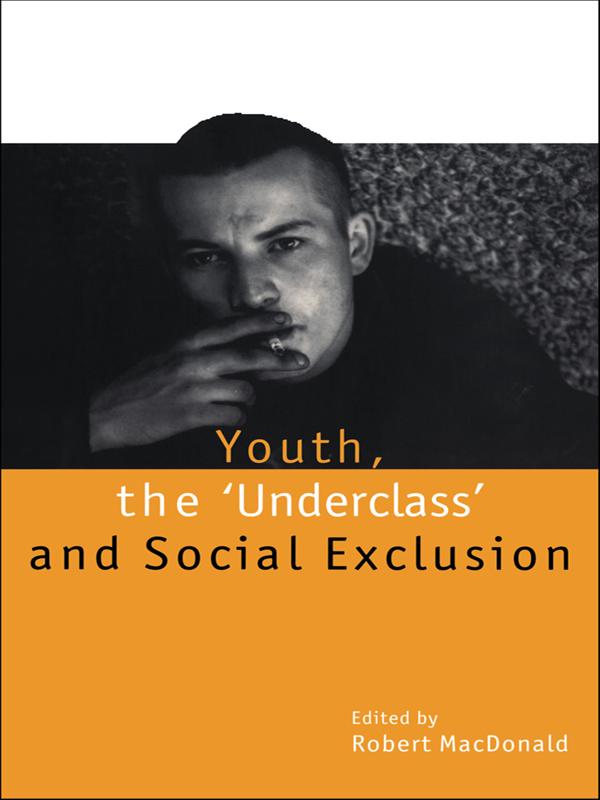
The idea that Britain, the US and other western societies are witnessing the rise of an underclass of people at the bottom of the social heap, structurally and culturally distinct from traditional patterns of `decent' working-class life, has become increasingly popular in the 1990s. Anti-work, anti-social, and welfare dependent cultures are said to typify this new `dangerous class' and `dangerous youth' are taken as the prime subjects of underclass theories. Debates about the family and single-parenthood, about crime and about unemployment and welfare reforms have all become embroiled in underclass theories which, whilst highly controversial, have had remarkable influence on the politics and policies of governments in Britain and the US.
Youth, the 'Underclass' and Social Exclusion constitutes the first concerted attempt to grapple with the underclass idea in relation to contemporary youth. It focuses upon unemployment, training, the labour market, crime, homelessness, and parenting and will be essential reading for students of social policy, sociology and criminology.
Betala smidigt med kort, Klarna, Apple Pay eller Google Pay. Är du inte nöjd har du alltid 14 dagars ångerrätt. Läs mer i våra villkor. Har du några frågor, mejla oss på hello@memmo.org.
Memmo gör det enklare att plugga – var du än är i världen. Hos oss samlar du kursböcker och smarta studieverktyg på ett och samma ställe: sammanfattningar, quiz, poddar och flashcards. Och så Ted, din studiekompis som svarar på allt du undrar. Över 50 000 studenter pluggar redan här – byggt för att du ska lära dig snabbare och stressa mindre.