
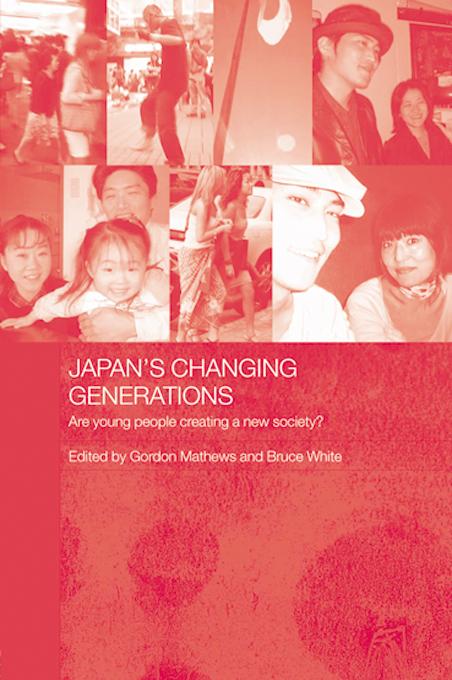
This book argues that 'the generation gap' in Japan is something more than young people resisting the adult social order before entering and conforming to that order. Rather, it signifies something more fundamental: the emergence of a new Japan, which may be quite different from the Japan of postwar decades. It argues that while young people in Japan in their teens, twenties and early thirties are not engaged in overt social or political resistance, they are turning against the existing Japanese social order, whose legitimacy has been undermined by the past decade of economic downturn. The book shows how young people in Japan are thinking about their bodies and identities, their social relationships, and their employment and parenting, in new and generationally contextual ways, that may help to create a future Japan quite different from Japan of the recent past.
Betala smidigt med kort, Klarna, Apple Pay eller Google Pay. Är du inte nöjd har du alltid 14 dagars ångerrätt. Läs mer i våra villkor. Har du några frågor, mejla oss på hello@memmo.org.
Memmo gör det enklare att plugga – var du än är i världen. Hos oss samlar du kursböcker och smarta studieverktyg på ett och samma ställe: sammanfattningar, quiz, poddar och flashcards. Och så Ted, din studiekompis som svarar på allt du undrar. Över 50 000 studenter pluggar redan här – byggt för att du ska lära dig snabbare och stressa mindre.
Du kanske också gillar
Köp boken0