
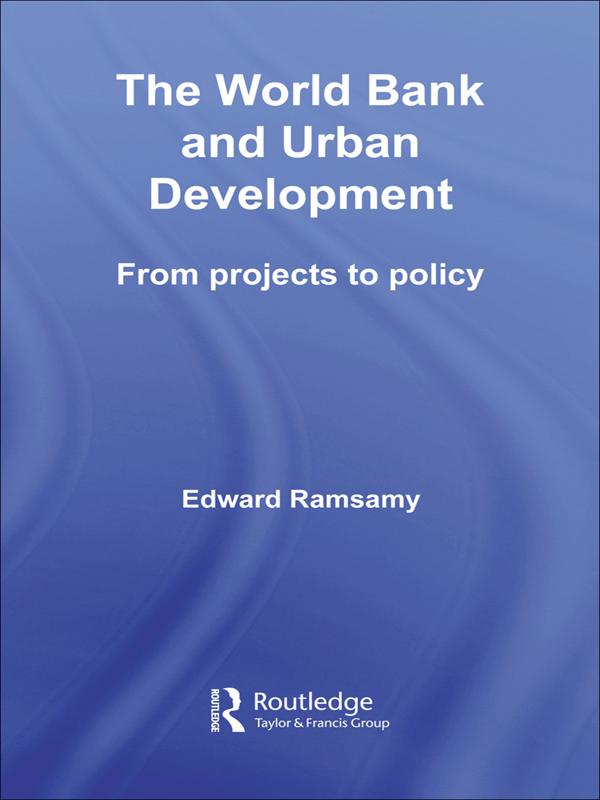
As one of the world’s most powerful supranational institutions, the World Bank has played an important role in international development discourse and practice since 1946. This is the first book-length history and analysis of the Bank’s urban programs and their complex relationship to urban policy formulation in the developing world. Through extensive primary research, the book examines four major themes:
- the political and economic forces that propelled the reluctant World Bank to finally embrace urban programs in the 1970s
- how the Bank fashioned its general ideology of development into specific urban projects
- trends and transitions within the Bank’s urban agenda from its inception to the present
- the World Bank’s historic and contemporary role in the complex interaction between global, national, and local forces that shape the urban agendas of developing countries.
The book also examines how protests from NGOs and civic movements, in the context of globalization and neo-liberalism, have influenced the World Bank policies from the 1990s to the present. The institution’s attempts to restructure and legitimate itself, in light of shifting geo-political and intellectual contexts, are considered throughout.
Betala smidigt med kort, Klarna, Apple Pay eller Google Pay. Är du inte nöjd har du alltid 14 dagars ångerrätt. Läs mer i våra villkor. Har du några frågor, mejla oss på hello@memmo.org.
Memmo gör det enklare att plugga – var du än är i världen. Hos oss samlar du kursböcker och smarta studieverktyg på ett och samma ställe: sammanfattningar, quiz, poddar och flashcards. Och så Ted, din studiekompis som svarar på allt du undrar. Över 50 000 studenter pluggar redan här – byggt för att du ska lära dig snabbare och stressa mindre.