
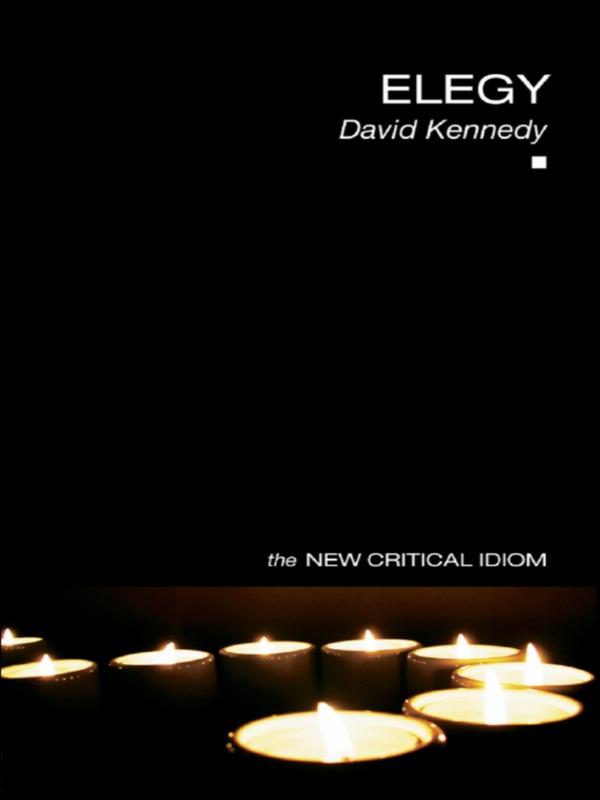
Grief and mourning are generally considered to be private, yet universal instincts. But in a media age of televised funerals and visible bereavement, elegies are increasingly significant and open to public scrutiny. Providing an overview of the history of the term and the different ways in which it is used, David Kennedy:
- outlines the origins of elegy, and the characteristics of the genre
- examines the psychology and cultural background underlying works of mourning
- explores how the modern elegy has evolved, and how it differs from ‘canonical elegy’, also looking at female elegists and feminist readings
- considers the elegy in the light of writing by theorists such as Jacques Derrida and Catherine Waldby
- looks at the elegy in contemporary writing, and particularly at how it has emerged and been adapted as a response to terrorist attacks such as 9/11.
Emphasising and explaining the significance of elegy today, this illuminating guide to an emotive literary genre will be of interest to students of literature, media and culture.
Betala smidigt med kort, Klarna, Apple Pay eller Google Pay. Är du inte nöjd har du alltid 14 dagars ångerrätt. Läs mer i våra villkor. Har du några frågor, mejla oss på hello@memmo.org.
Memmo gör det enklare att plugga – var du än är i världen. Hos oss samlar du kursböcker och smarta studieverktyg på ett och samma ställe: sammanfattningar, quiz, poddar och flashcards. Och så Ted, din studiekompis som svarar på allt du undrar. Över 50 000 studenter pluggar redan här – byggt för att du ska lära dig snabbare och stressa mindre.