
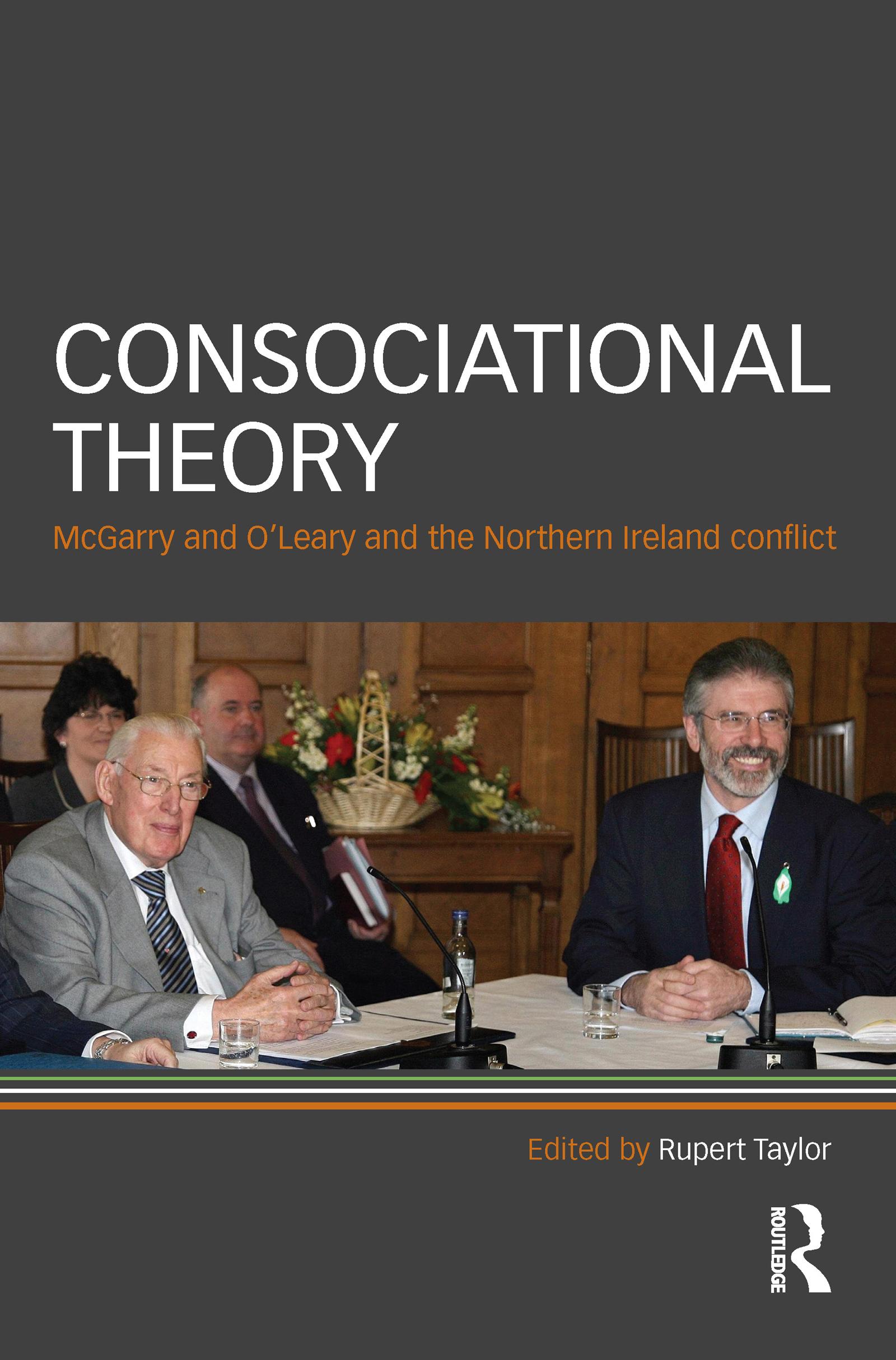
Consociational power sharing is increasingly gaining ground, right around the world, as a means for resolving political conflict in divided societies. In this volume, edited by Rupert Taylor, nineteen internationally-respected scholars engage in a lively debate about the merits of the theory underlying this approach.
The volume focuses specifically on one of the leading cases under the global spotlight, the Northern Ireland conflict, and brings together the most prominent proponents and opponents of consociationalism. Northern Ireland’s transition from war to peace is seen by consociationalists as flowing from the historic Belfast Agreement of 1998, and specifically from the Agreement’s consociational framework. The Northern Ireland case is marketed by consociationalists as representing best practice, and as providing a template for ending conflicts in other parts of the world. However, as this volume interrogates, on what grounds, and to what extent, can such a positive reading be upheld?
Taken as a whole, this volume, structured as a symposium around the highly-influential argument of John McGarry and Brendan O’Leary, offers comparative, engaging, and critical insight into how political theory can contribute to the creation of a better world.
Consociational Theory is an important text for anyone with an interest in political theory, conflict resolution in divided societies, or Irish politics.
Betala smidigt med kort, Klarna, Apple Pay eller Google Pay. Är du inte nöjd har du alltid 14 dagars ångerrätt. Läs mer i våra villkor. Har du några frågor, mejla oss på hello@memmo.org.
Memmo gör det enklare att plugga – var du än är i världen. Hos oss samlar du kursböcker och smarta studieverktyg på ett och samma ställe: sammanfattningar, quiz, poddar och flashcards. Och så Ted, din studiekompis som svarar på allt du undrar. Över 50 000 studenter pluggar redan här – byggt för att du ska lära dig snabbare och stressa mindre.