
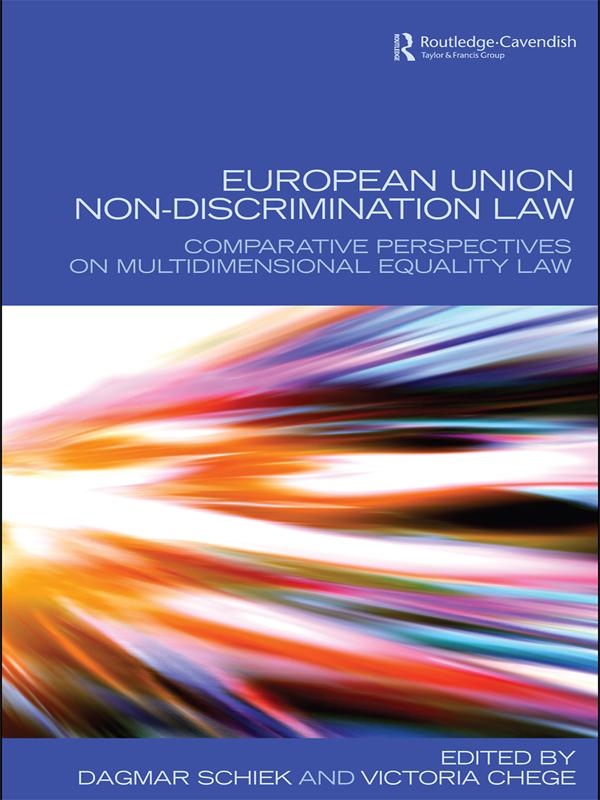
EU equality law is multidimensional in being based on different rationales and concepts. Consequently, the concept of discrimination has become fragmented, with different instruments envisaging different scopes of protection. This raises questions as to the ability of EU law to address the situation of persons excluded on a number of grounds.
This edited collection addresses the increasing complexity of European Equality Law from jurisprudential, sociological and political science perspectives. Internationally renowned researchers from Scandinavian, Continental and Central European countries and Britain analyse consequences of multiplying discrimination grounds within EU equality law, considering its multidimensionality and intersectionality.
The contributors to the volume theorise the move from formal to substantive equality law and its interrelation to new forms of governance, demonstrating the specific combination of non-discrimination law with welfare state models which reveal the global implications of the European Union. The book will be of interest to academics and policy makers all over the world, in particular to those researching and studying law, political sciences and sociology with an interest in human rights, non discrimination law, contract and employment law or European studies.
Betala smidigt med kort, Klarna, Apple Pay eller Google Pay. Är du inte nöjd har du alltid 14 dagars ångerrätt. Läs mer i våra villkor. Har du några frågor, mejla oss på hello@memmo.org.
Memmo gör det enklare att plugga – var du än är i världen. Hos oss samlar du kursböcker och smarta studieverktyg på ett och samma ställe: sammanfattningar, quiz, poddar och flashcards. Och så Ted, din studiekompis som svarar på allt du undrar. Över 50 000 studenter pluggar redan här – byggt för att du ska lära dig snabbare och stressa mindre.