
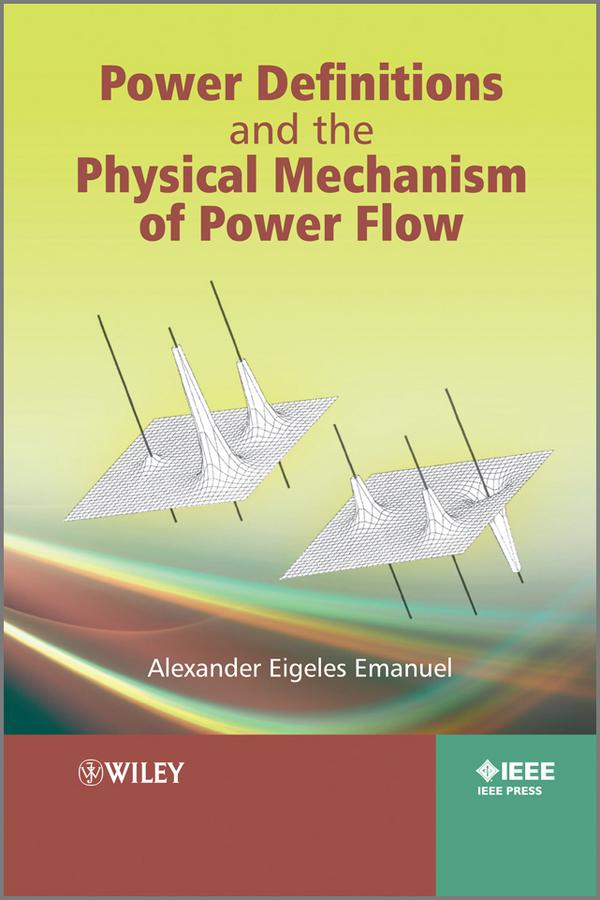
Key features:
- Explains the physical mechanism of energy flow under different conditions: single- and three-phase, sinusoidal and nonsinusoidal, balanced and unbalanced systems
- Starts at an elementary level and becomes more complex, with six core chapters and six appendices to clarify the mathematical aspects
- Discusses and recommends power definitions that played a significant historical role in paving the road for the two standards
- Provides a number of original unsolved problems at the end of each chapter
- Introduces a new nonactive power; the Randomness power.
Power Definitions and the Physical Mechanism of Power Flow is useful for electrical engineers and consultants involved in energy and power quality. It is also helpful to engineers dealing with energy flow quantification, design and manufacturing of metering instrumentation; consultants working with regulations related to renewable energy courses and the smart grid; and electric utility planning and operation engineers dealing with energy bill structure. The text is also relevant to university researchers, professors, and advanced students in power systems, power quality and energy related courses.
Betala smidigt med kort, Klarna, Apple Pay eller Google Pay. Är du inte nöjd har du alltid 14 dagars ångerrätt. Läs mer i våra villkor. Har du några frågor, mejla oss på hello@memmo.org.
Memmo gör det enklare att plugga – var du än är i världen. Hos oss samlar du kursböcker och smarta studieverktyg på ett och samma ställe: sammanfattningar, quiz, poddar och flashcards. Och så Ted, din studiekompis som svarar på allt du undrar. Över 50 000 studenter pluggar redan här – byggt för att du ska lära dig snabbare och stressa mindre.