
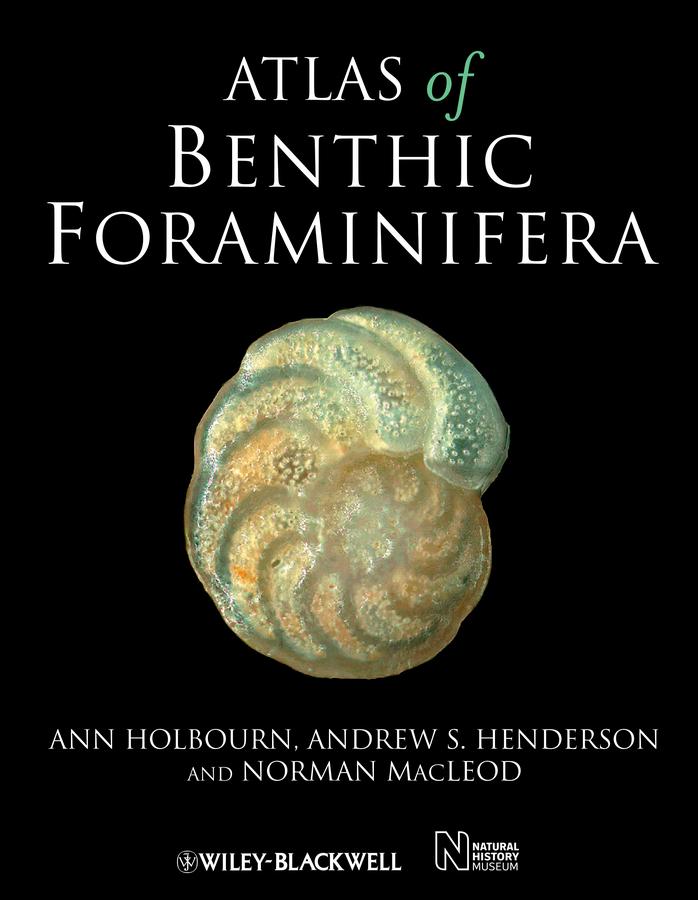
An up-to-date atlas of an important fossil and living group, with the Natural History Museum.
Deep-sea benthic foraminifera have played a central role in biostratigraphic, paleoecological, and paleoceanographical research for over a century. These single–celled marine protists are important because of their geographic ubiquity, distinction morphologies and rapid evolutionary rates, their abundance and diversity deep–sea sediments, and because of their utility as indicators of environmental conditions both at and below the sediment–water interface. In addition, stable isotopic data obtained from deep–sea benthic foraminiferal tests provide paleoceanographers with environmental information that is proving to be of major significance in studies of global climatic change.
This work collects together, for the first time, new morphological descriptions, taxonomic placements, stratigraphic occurrence data, geographical distribution summaries, and palaeoecological information, along with state-of-the-art colour photomicrographs (most taken in reflected light, just as you would see them using light microscopy), of 300 common deep-sea benthic foraminifera species spanning the interval from Jurassic - Recent. This volume is intended as a reference and research resource for post-graduate students in micropalaeontology, geological professionals (stratigraphers, paleontologists, paleoecologists, palaeoceanographers), taxonomists, and evolutionary (paleo)biologists.
Betala smidigt med kort, Klarna, Apple Pay eller Google Pay. Är du inte nöjd har du alltid 14 dagars ångerrätt. Läs mer i våra villkor. Har du några frågor, mejla oss på hello@memmo.org.
Memmo gör det enklare att plugga – var du än är i världen. Hos oss samlar du kursböcker och smarta studieverktyg på ett och samma ställe: sammanfattningar, quiz, poddar och flashcards. Och så Ted, din studiekompis som svarar på allt du undrar. Över 50 000 studenter pluggar redan här – byggt för att du ska lära dig snabbare och stressa mindre.