
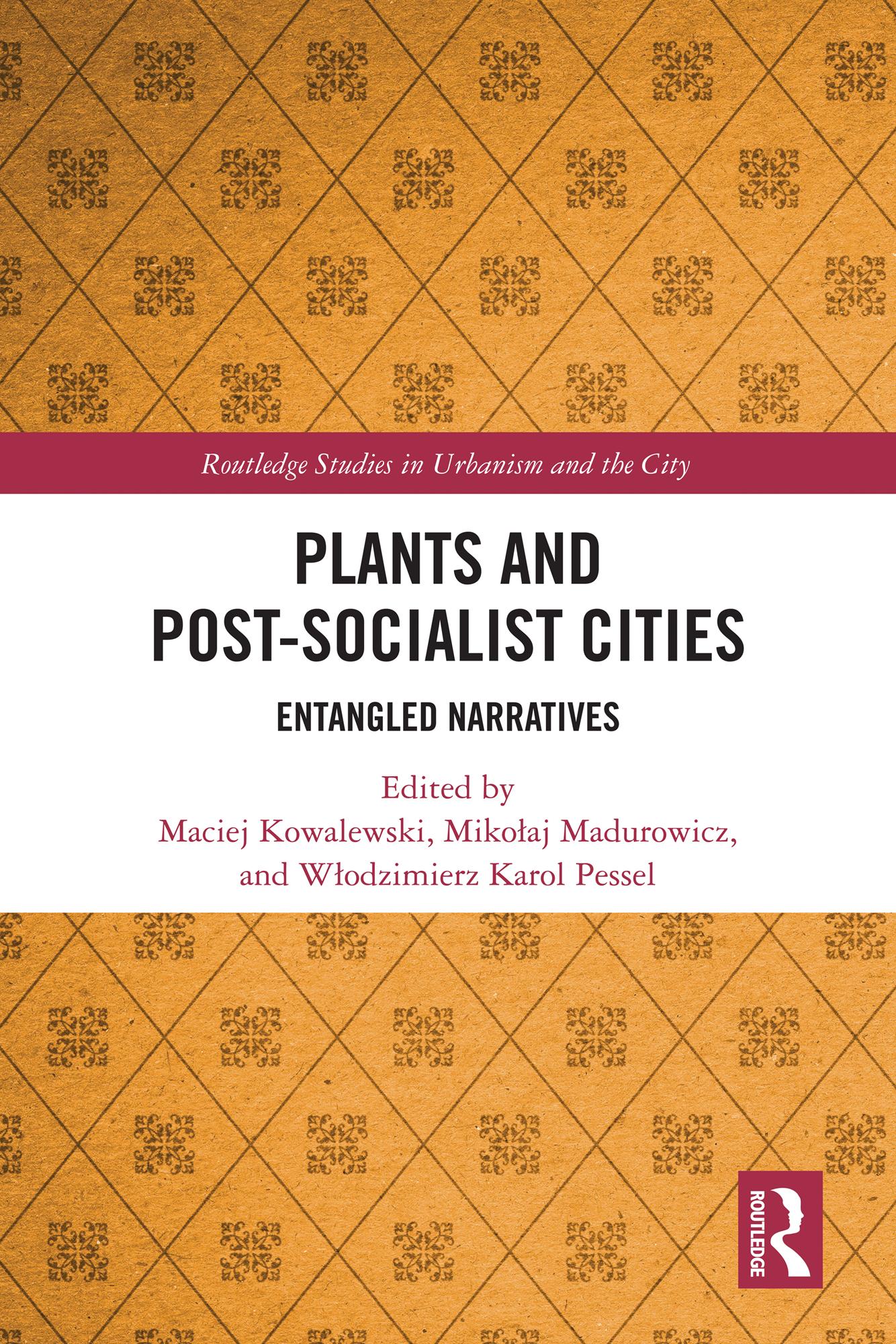
This book offers a theoretically informed exploration of the political, cultural, and ecological significance of urban greenery in post-socialist cities. It traces how plants mediate among memory, infrastructure, and regimes of power across diverse historical and geographical contexts.
The book develops a vocabulary for understanding plants as actors, symbols, archives, and processes within urban transformation. It does so through case studies ranging from Polish housing estates, Nowa Huta, the Upper Silesian brownfields, Elbląg, Szczecin, Warsaw, Vilnius, and Belgrade to Indian urban imaginaries and Chornobyl’s gardens. Drawing on environmental humanities, urban studies, critical plant studies, political ecology, plant blindness, post-political theory, and more-than-human approaches, the book shows how vegetal life participates in memory, governance, conflict, decay, and everyday urban experience.
This book will appeal to scholars and advanced students in urban studies, cultural studies, environmental humanities, anthropology, and human geography, as well as to readers interested in post-socialist transformations, urban ecology, and more-than-human approaches to the city.
Betala smidigt med kort, Klarna, Apple Pay eller Google Pay. Är du inte nöjd har du alltid 14 dagars ångerrätt. Läs mer i våra villkor. Har du några frågor, mejla oss på hello@memmo.org.
Memmo gör det enklare att plugga – var du än är i världen. Hos oss samlar du kursböcker och smarta studieverktyg på ett och samma ställe: sammanfattningar, quiz, poddar och flashcards. Och så Ted, din studiekompis som svarar på allt du undrar. Över 75 000 studenter pluggar redan här – byggt för att du ska lära dig snabbare och stressa mindre.