
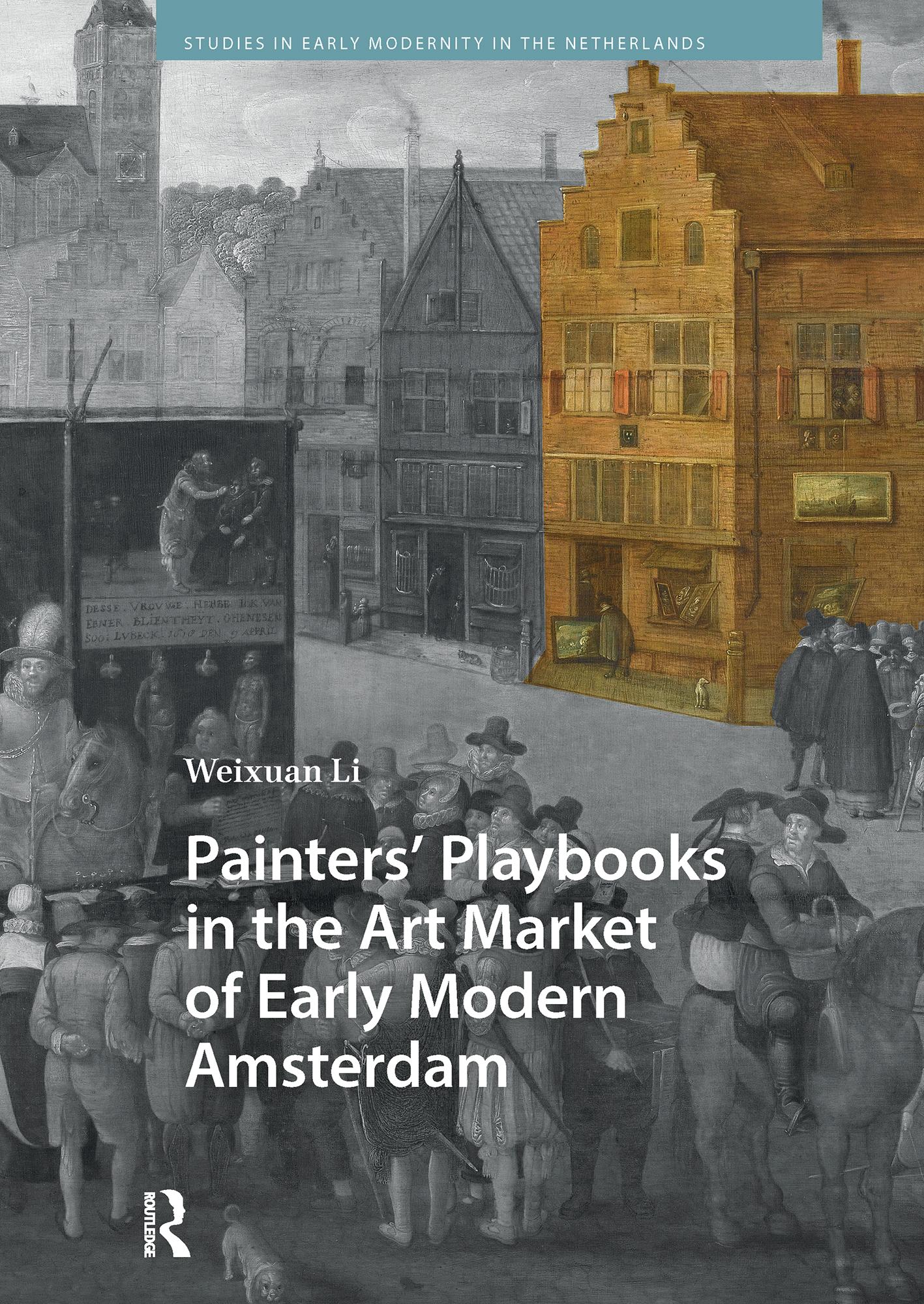
The art market in seventeenth-century Amsterdam is renowned as a competitive, multi-layered arena where diverse artists catered to a broad and varied clientele. How did this intricate market function? How did individual painters navigate this system, making business and artistic decisions that eventually gave shape to the so-called ‘Golden Age’ of Dutch art? Existing economic and art historical methodologies have fallen short of providing holistic explanations. Painters’ Playbooks introduces an innovative socio-spatial approach, using digital methods to examine the art market, shedding light on the artistic development in seventeenth-century Amsterdam. By synthesizing various historical sources digitally, this book delves into artists’ collective behaviours – or the ‘playbooks’ – discernible in their location choices, social relations, and use of house interiors. Analysing historical data through a socio-spatial lens, this book illustrates how the changes in artists’ playbooks not only shaped the multi-layered market structure but also influenced artistic innovation in seventeenth-century Amsterdam.
Betala smidigt med kort, Klarna, Apple Pay eller Google Pay. Är du inte nöjd har du alltid 14 dagars ångerrätt. Läs mer i våra villkor. Har du några frågor, mejla oss på hello@memmo.org.
Memmo gör det enklare att plugga – var du än är i världen. Hos oss samlar du kursböcker och smarta studieverktyg på ett och samma ställe: sammanfattningar, quiz, poddar och flashcards. Och så Ted, din studiekompis som svarar på allt du undrar. Över 50 000 studenter pluggar redan här – byggt för att du ska lära dig snabbare och stressa mindre.
Du kanske också gillar
Köp boken0