
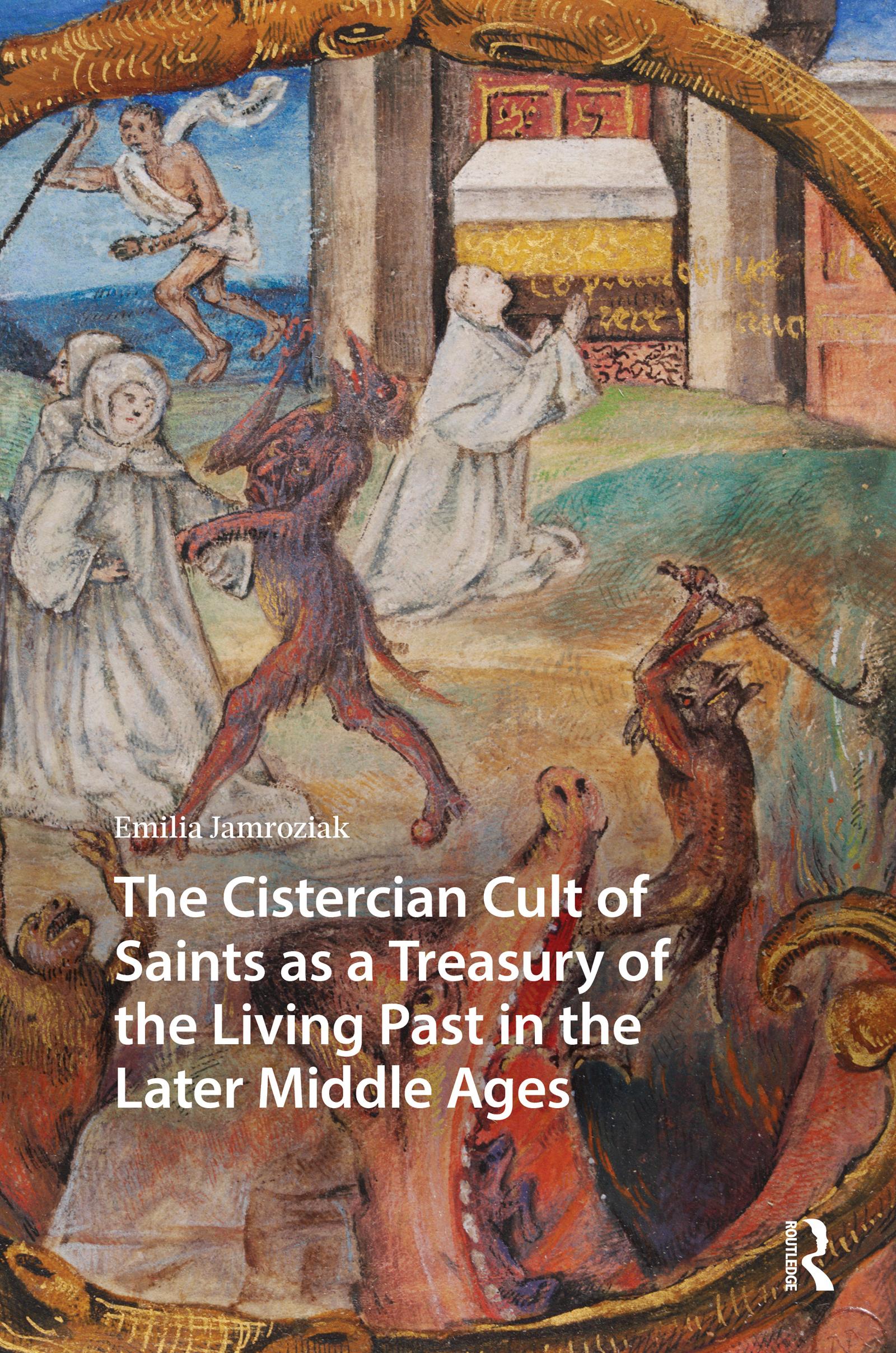
This book explains how the late medieval Cistercian Order and its communities in Central Europe engaged with, adopted, and supported a broad range of saints’ cults as an element of their relationship with the outside world, within their network and as an important element of their identity.
Contrary to traditional interpretations of Cistercian culture, the Order was not against the cult of saints. The liturgical calendar accommodated numerous saints, and central to Cistercian identity in the later Middle Ages was St Bernard of Clairvaux, who embodied the Order and delivered key interpretations within its monastic culture. Many individual communities were highly invested in the cult of saints as they sought to create strong local and regional belonging, maintain ties to the outside world, and control significant elements of the devotional landscape. However, the saints also cemented crucial bonds within filiations and facilitated a shared identity within geographically extensive networks. Textually, materially, visually, and ritually, cults of saints between 1300 and the early sixteenth century were an important facet of Cistercian culture; by exploring these manifestations, we can better understand late medieval monasticism on its own terms.
An analysis of the complex connection between Cistercian communities and the Order itself and a study of the monastic practice of ‘living with the past’, this book is a valuable contribution to the historiography of medieval monasticism and medieval religious culture.
Betala smidigt med kort, Klarna, Apple Pay eller Google Pay. Är du inte nöjd har du alltid 14 dagars ångerrätt. Läs mer i våra villkor. Har du några frågor, mejla oss på hello@memmo.org.
Memmo gör det enklare att plugga – var du än är i världen. Hos oss samlar du kursböcker och smarta studieverktyg på ett och samma ställe: sammanfattningar, quiz, poddar och flashcards. Och så Ted, din studiekompis som svarar på allt du undrar. Över 50 000 studenter pluggar redan här – byggt för att du ska lära dig snabbare och stressa mindre.