
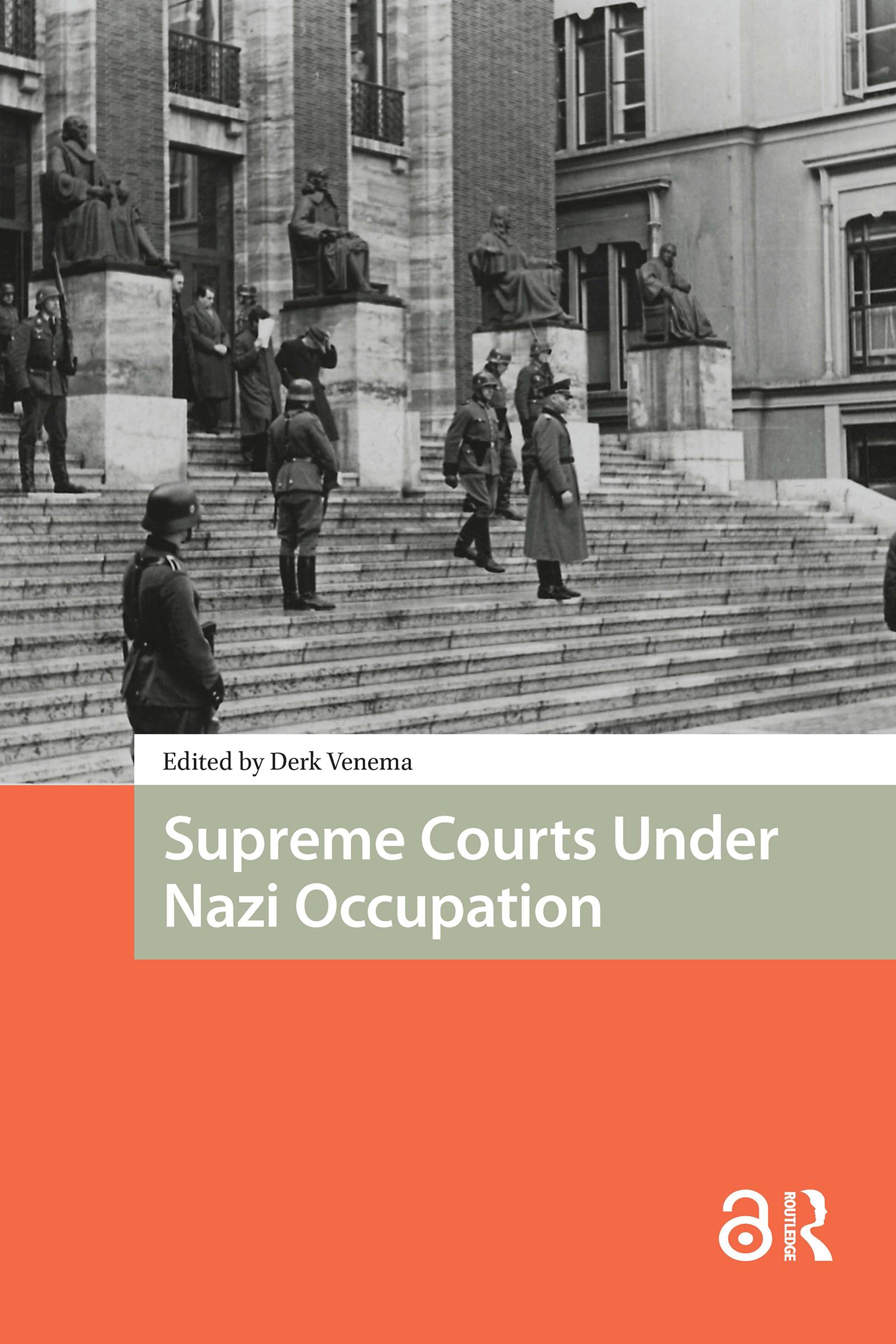
This is the first extensive treatment of leading judicial institutions under Nazi rule in WWII. It focusses on all democratic countries under German occupation, and provides the details for answering questions like: how can law serve as an instrument of defence against an oppressive regime? Are the courts always the guardians of democracy and rule of law? What role was there for international law? How did the courts deal with dismissals, new appointees, new courts, forced German ordinances versus national law? How did judges justify their actions, help citizens, appease the enemy, protest against injustice? Experts from all democracies that were occupied by the Nazis paint vivid pictures of oppression, collaboration, and resistance. The results are interpreted in a socio-legal framework introducing the concept of ‘moral hygiene’ to explain the clash between normative and descriptive approaches in public opinion and scholarship concerning officials’ behaviour in war-time.
Betala smidigt med kort, Klarna, Apple Pay eller Google Pay. Är du inte nöjd har du alltid 14 dagars ångerrätt. Läs mer i våra villkor. Har du några frågor, mejla oss på hello@memmo.org.
Memmo gör det enklare att plugga – var du än är i världen. Hos oss samlar du kursböcker och smarta studieverktyg på ett och samma ställe: sammanfattningar, quiz, poddar och flashcards. Och så Ted, din studiekompis som svarar på allt du undrar. Över 50 000 studenter pluggar redan här – byggt för att du ska lära dig snabbare och stressa mindre.
Du kanske också gillar
Köp boken0