
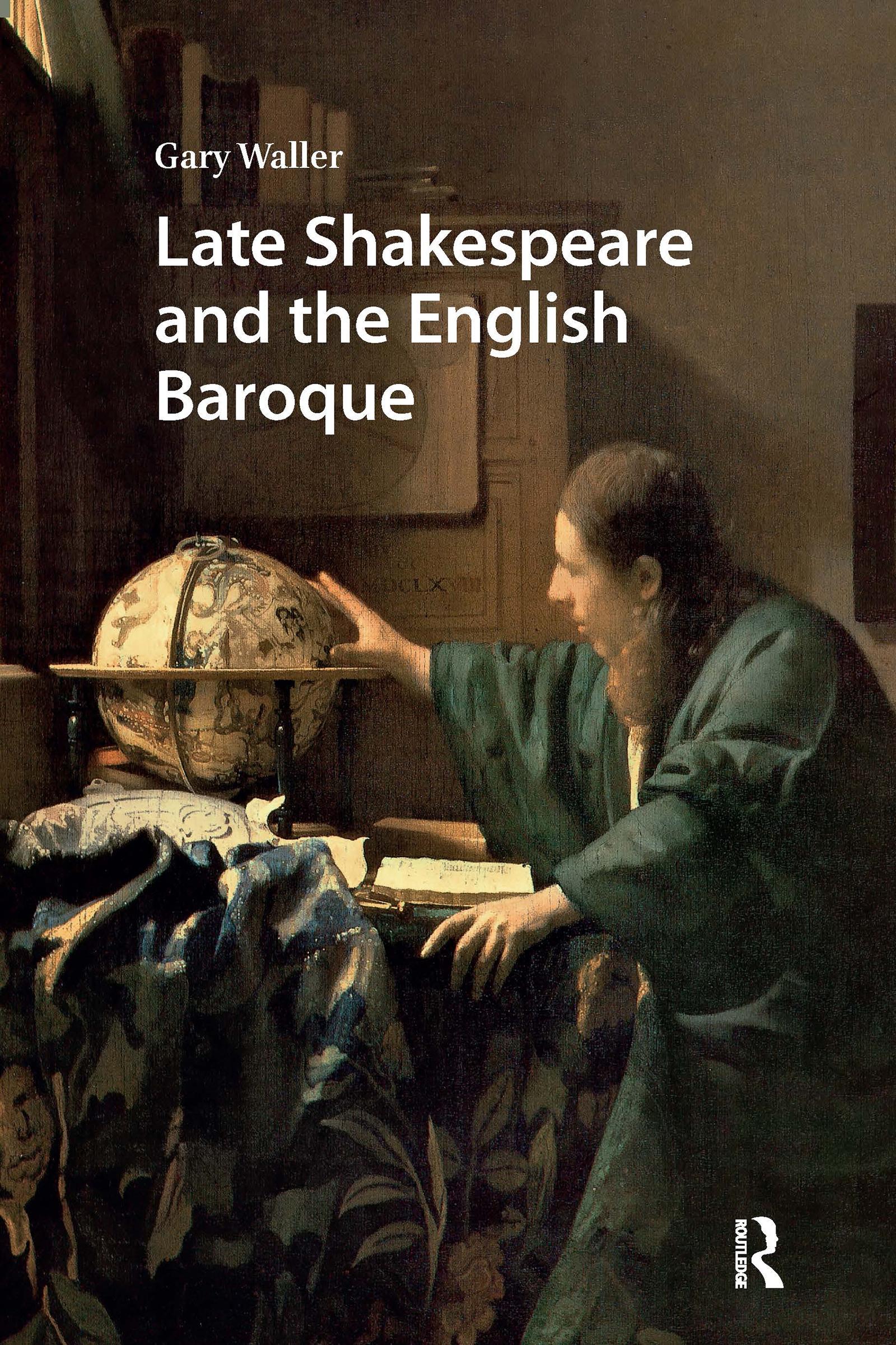
Late Shakespeare and the English Baroque focuses mainly on Shakespeare’s late (or later) works, those written from around 1607. It sets both poetry and plays within the emerging culture of the baroque, the term defined not merely by stylistic features but by the underlying ideological ‘structure of feeling’ of baroque culture in early modern England. The book extends the mode of analysis of The Female Baroque (Amsterdam University Press, 2020) and draws on theoretical work by José Antonio Maravall, Raymond Williams, and Julia Kristeva. It analyzes recurring Baroque characteristics – hyperbole and melancholy, theatricality, gender, and ‘plateauing’. Attention is given to the sonnets and other poems, as well as the tragedies from Hamlet on, and argues that increasingly, tragi-comedy emerges as a distinctively baroque Shakespearean characteristic. In the final chapter, primarily on The Tempest, the late Shakespeare is shown to have philosophical insights parallel to Montaigne or Bruno, and to provide anticipatory connections with later baroque artists like Vermeer.
Betala smidigt med kort, Klarna, Apple Pay eller Google Pay. Är du inte nöjd har du alltid 14 dagars ångerrätt. Läs mer i våra villkor. Har du några frågor, mejla oss på hello@memmo.org.
Memmo gör det enklare att plugga – var du än är i världen. Hos oss samlar du kursböcker och smarta studieverktyg på ett och samma ställe: sammanfattningar, quiz, poddar och flashcards. Och så Ted, din studiekompis som svarar på allt du undrar. Över 50 000 studenter pluggar redan här – byggt för att du ska lära dig snabbare och stressa mindre.