
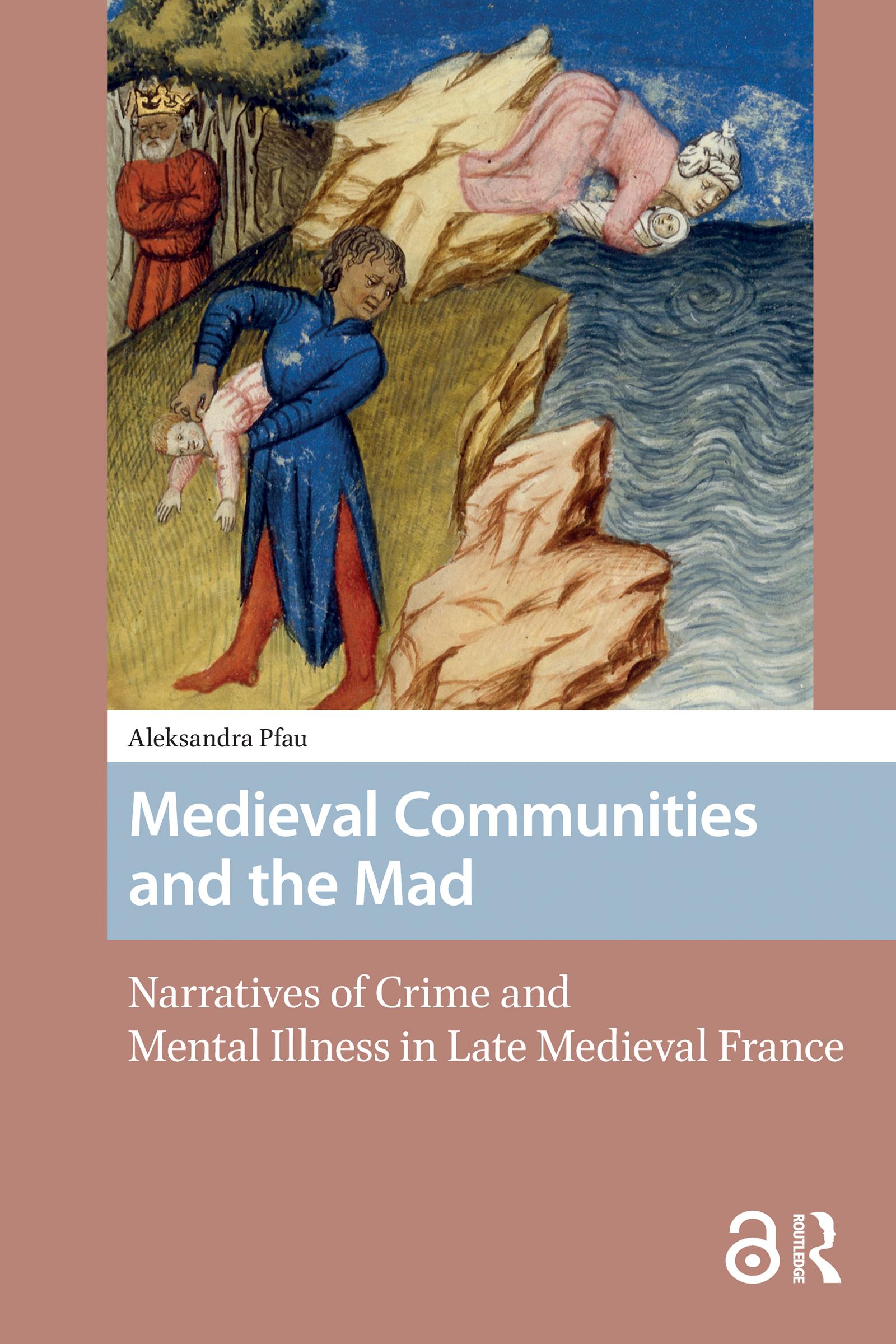
The concept of madness as a challenge to communities lies at the core of legal sources. Medieval Communities and the Mad: Narratives of Crime and Mental Illness in Late Medieval France considers how communal networks, ranging from the locale to the realm, responded to people who were considered mad. The madness of individuals played a role in engaging communities with legal mechanisms and proto-national identity constructs, as petitioners sought the king’s mercy as an alternative to local justice. The resulting narratives about the mentally ill in late medieval France constructed madness as an inability to live according to communal rules. Although such texts defined madness through acts that threatened social bonds, those ties were reaffirmed through the medium of the remission letter. The composers of the letters presented madness as a communal concern, situating the mad within the household, where care could be provided. Those considered mad were usually not expelled but integrated, often through pilgrimage, surveillance, or chains, into their kin and communal relationships.
Betala smidigt med kort, Klarna, Apple Pay eller Google Pay. Är du inte nöjd har du alltid 14 dagars ångerrätt. Läs mer i våra villkor. Har du några frågor, mejla oss på hello@memmo.org.
Memmo gör det enklare att plugga – var du än är i världen. Hos oss samlar du kursböcker och smarta studieverktyg på ett och samma ställe: sammanfattningar, quiz, poddar och flashcards. Och så Ted, din studiekompis som svarar på allt du undrar. Över 50 000 studenter pluggar redan här – byggt för att du ska lära dig snabbare och stressa mindre.