
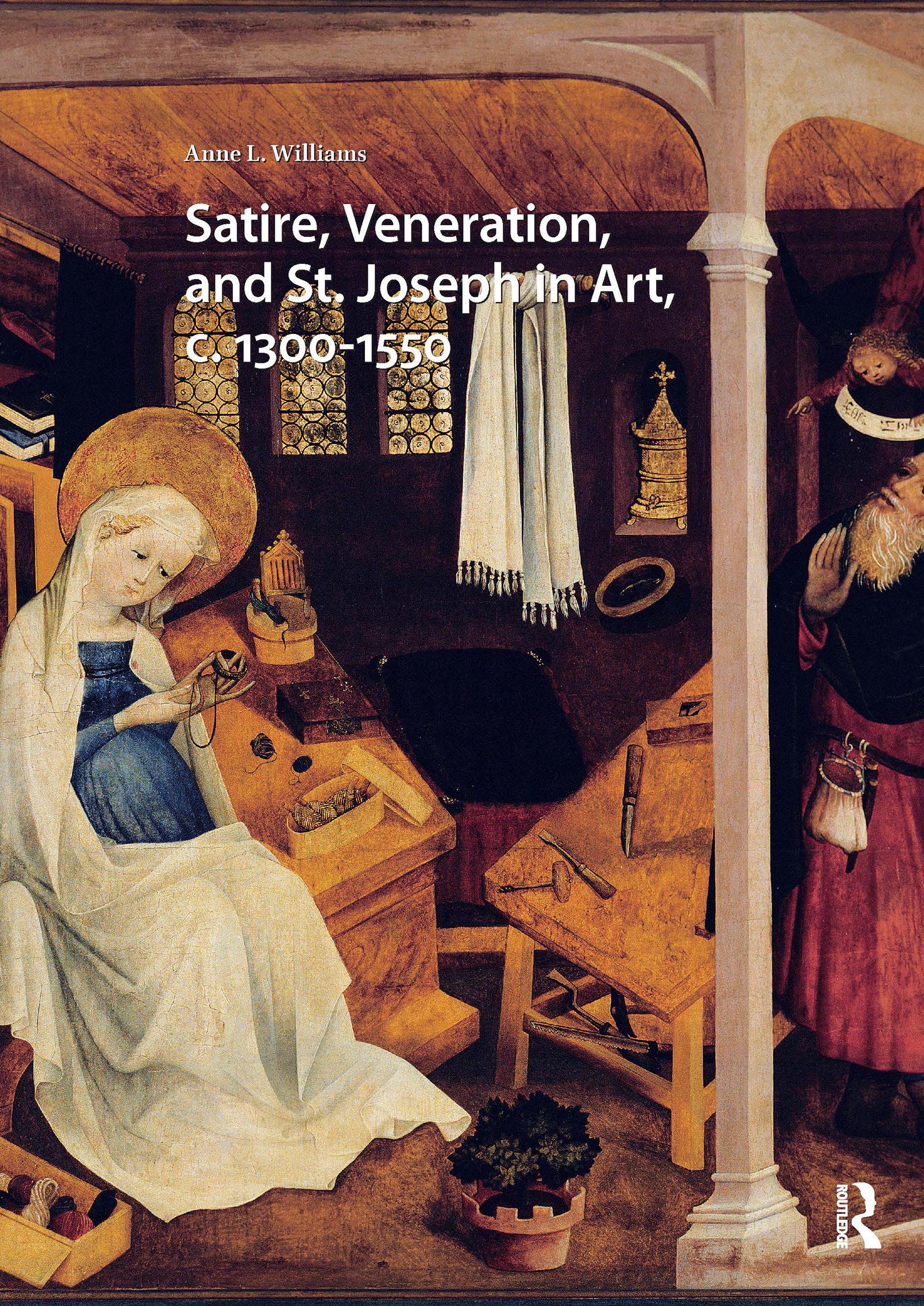
Satire, Veneration, and St. Joseph in Art, c. 1300.1550 is the first book to reclaim satire as a central component of Catholic altarpieces, devotional art, and veneration, moving beyond humor's relegation to the medieval margins or to the profane arts alone. The book challenges humor's perception as a mere teaching tool for the laity and the antithesis of 'high' veneration and theology, a divide perpetuated by Counter-Reformation thought and the inheritance of Mikhail Bakhtin (Rabelais and His World, 1965). It reveals how humor, laughter, and material culture played a critical role in establishing St. Joseph as an exemplar in western Europe as early as the thirteenth century. Its goal is to open a new line of interpretation in medieval and early modern cultural studies by revealing the functions of humor in sacred scenes, the role of laughter as veneration, and the importance of play for pre-Reformation religious experiences.
Betala smidigt med kort, Klarna, Apple Pay eller Google Pay. Är du inte nöjd har du alltid 14 dagars ångerrätt. Läs mer i våra villkor. Har du några frågor, mejla oss på hello@memmo.org.
Memmo gör det enklare att plugga – var du än är i världen. Hos oss samlar du kursböcker och smarta studieverktyg på ett och samma ställe: sammanfattningar, quiz, poddar och flashcards. Och så Ted, din studiekompis som svarar på allt du undrar. Över 50 000 studenter pluggar redan här – byggt för att du ska lära dig snabbare och stressa mindre.