
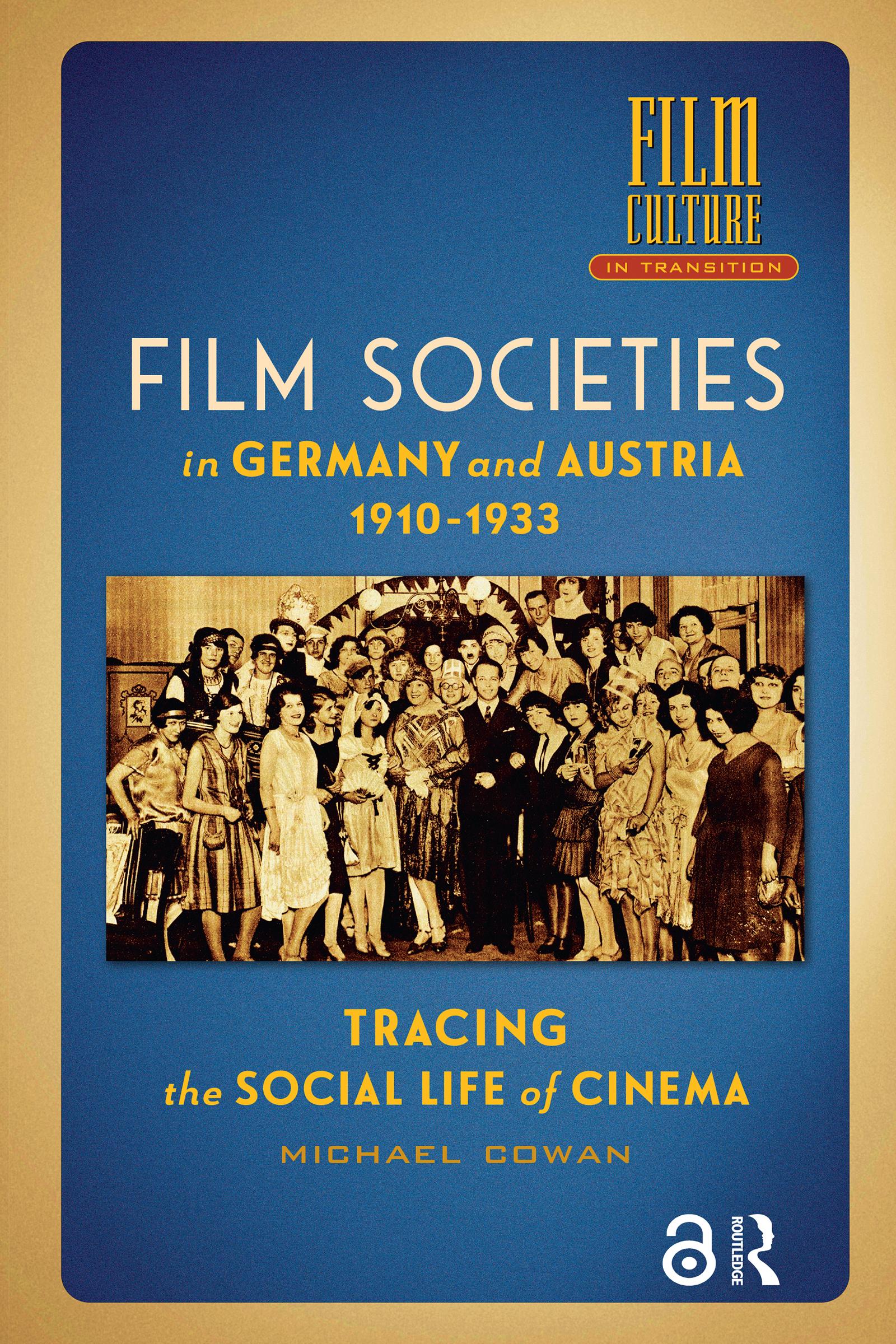
This study traces the evolution of early film societies in Germany and Austria, from the emergence of mass movie theaters in the 1910s to the turbulent years of the late Weimar Republic. Examining a diverse array of groups, it approaches film societies as formations designed to assimilate and influence a new medium: a project emerging from the world of amateur science before taking new directions into industry, art and politics. Through an interdisciplinary approach—in dialogue with social history, print history and media archaeology—it also transforms our theoretical understanding of what a film society was and how it operated. Far from representing a mere collection of pre-formed cinephiles, film societies were, according to the book’s central argument, productive social formations, which taught people how to nurture their passion for the movies, how to engage with cinema, and how to interact with each other. Ultimately, the study argues that examining film societies can help to reveal the diffuse agency by which generative ideas of cinema take shape.
Betala smidigt med kort, Klarna, Apple Pay eller Google Pay. Är du inte nöjd har du alltid 14 dagars ångerrätt. Läs mer i våra villkor. Har du några frågor, mejla oss på hello@memmo.org.
Memmo gör det enklare att plugga – var du än är i världen. Hos oss samlar du kursböcker och smarta studieverktyg på ett och samma ställe: sammanfattningar, quiz, poddar och flashcards. Och så Ted, din studiekompis som svarar på allt du undrar. Över 50 000 studenter pluggar redan här – byggt för att du ska lära dig snabbare och stressa mindre.